The checkout vs the pagemedia buyer software
Checkout Champ vs Landingi
By Dana Rourke, Lead reviewer. Reviewed by Campaign Buyer Editorial. Updated 29 September 2026.
Quick answer
Pick Checkout Champ if you already sell at real volume and your next gains sit in one-click upsells, subscriptions and routing payments across several merchant accounts; pick Landingi if you want a cheap, template-driven page builder to point PPC and lead-gen traffic at, with A/B/X testing included and your checkout living elsewhere.
Side by side
| Checkout Champ | Landingi | |
|---|---|---|
| What it is | Direct-response checkout and CRM | Hosted landing page builder |
| Best for | Upsells, subscriptions, payment routing | Budget PPC and lead-gen pages |
| Funnel stage | Cart, payment and rebill | Ad click to page |
| Landing pages | Funnel pages around the checkout | Its main product, 400+ templates |
| Checkout | Custom checkout with order bumps | None, hands off to your cart |
| One-click upsells | Yes | No |
| Subscriptions | Yes, on connected accounts | No |
| Payment routing | 270+ gateways, multiple accounts | None |
| Page testing | A/B/C/D on pages and offers | A/B/X from the entry plan |
| Signup | Demo and quote, no free trial | Self-serve, buy online |
| Entry price | $300/mo + 1% of sales | $29/mo |
If you are down to Checkout Champ and Landingi, the first thing to get straight is that they do not do the same job. Landingi builds and hosts the page your ad sends visitors to. Checkout Champ runs the cart, the order bumps, the upsells, the subscriptions and the payment routing that happen after a visitor decides to buy. Most paid-traffic businesses eventually need both jobs covered. The decision here is which one you are buying software to fix right now.
Landingi is our default pick between the two, because it is self-serve, opens at $29 a month, and goes to work on the part of the funnel most buyers can improve first: the page. Checkout Champ is the sharper choice only when a funnel already sends real sales volume into the checkout and the next gains sit in average order value, rebills or payment redundancy. That fit can be worth a lot, but it comes with a demo, a percentage fee and real operational work.
The one question that decides it
Are you losing visitors before they decide to buy, or losing money after they decide?
Pick Landingi when the problem is the page: the message, the layout, the load, or simply getting a campaign page live without waiting on a developer. Its templates, AI generator and included A/B/X testing are built for a buyer who ships a lot of pages on a budget. Pick Checkout Champ when the offer already converts and the money is in a faster checkout, a better bump, a true one-click upsell, a subscription rebill, or spreading charges over more than one merchant account. Buy the wrong half and the real bottleneck stays exactly where it is.
The case for Checkout Champ
Checkout Champ is a direct-response ecommerce platform built on the Konnektive CRM engine. It replaces the native store checkout, builds the funnel pages around it, and keeps customers, orders and subscriptions in the CRM behind the sale. The features a seller buys it for are on-page and pop-up order bumps, true one-click post-purchase upsells, dynamic offers that change by product, subscription billing, and A/B/C/D testing across pages, prices, products and upsell flows.
What sets it apart is payment routing: it connects to more than 270 gateways and spreads charges across the merchant accounts you connect, so a high-volume seller gets redundancy when one account has a problem, and subscriptions can rebill on any connected account. Landingi has none of this. It builds a page and hands the visitor to whatever checkout you already run.
Checkout Champ asks for a real commitment: it is sold by demo, has no public free trial, and opens at $300 a month plus 1% of gross sales. Fraud screening, 3-D Secure and account updater bill as separate line items, and staying with your account manager past the 60-day setup period is another charge. It also leaves you with technical work. Cross-domain landers and checkout redirects can drop click IDs, so server-side tracking needs a technical owner, and the platform reports chargebacks after they post but does not manage them. Independent proof is thin too, with a small public review footprint, so a careful demo matters more here than a star rating. Budget the all-in number with add-ons.
The case for Landingi
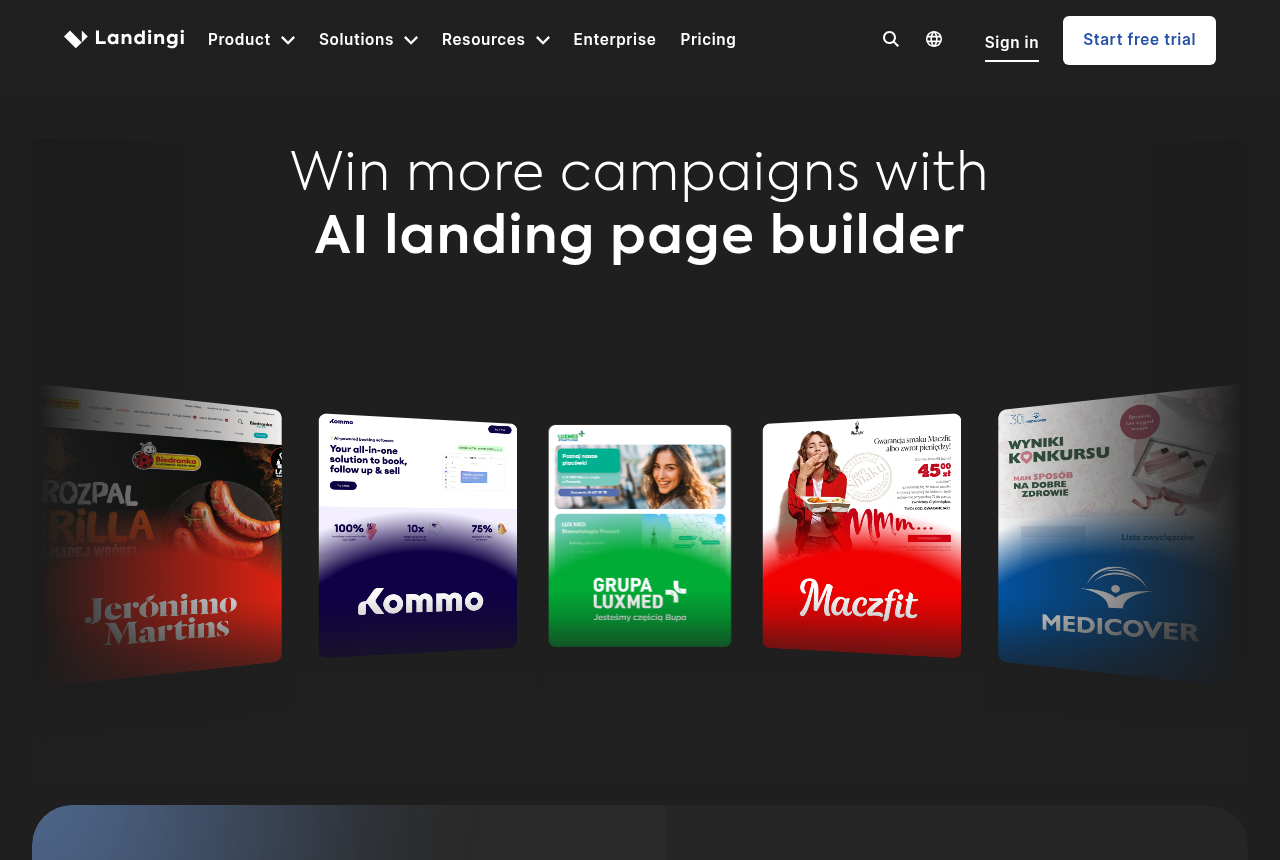
Landingi wins on the thing most media buyers check first: entry cost, and how fast a page goes live. Build opens at $29 a month, A/B/X testing is included rather than gated behind a premium tier, and there are more than 400 templates plus an AI generator called Lunar, so a non-designer gets a campaign page up the same afternoon. It has been building pages for over a decade, and its review scores hold up (G2 4.5, Capterra 4.8, Trustpilot 4.1). Publishing is flexible too: your own domain, a WordPress plugin, Landingi hosting or your own server.
What you trade is polish and the top of the feature set. The editor is more rigid than the premium builders, mobile layouts often need manual cleanup, and dynamic text and server-side testing sit behind higher tiers. Every plan caps monthly visits, and the AI features draw on a credit allowance you can run out of. Watch the fine print: add-on domains are $5 a month each and keep billing after you cancel the core plan until the paid period ends, which has caught buyers out for months. For a lead-gen or PPC buyer who wants pages that convert and a bill that stays small, those are livable trade-offs. What Landingi does not do is take the money. There is no native cart, no order bumps, no one-click upsells and no subscription billing, so the checkout stays with a second tool.
They fix problems at different points in the sale
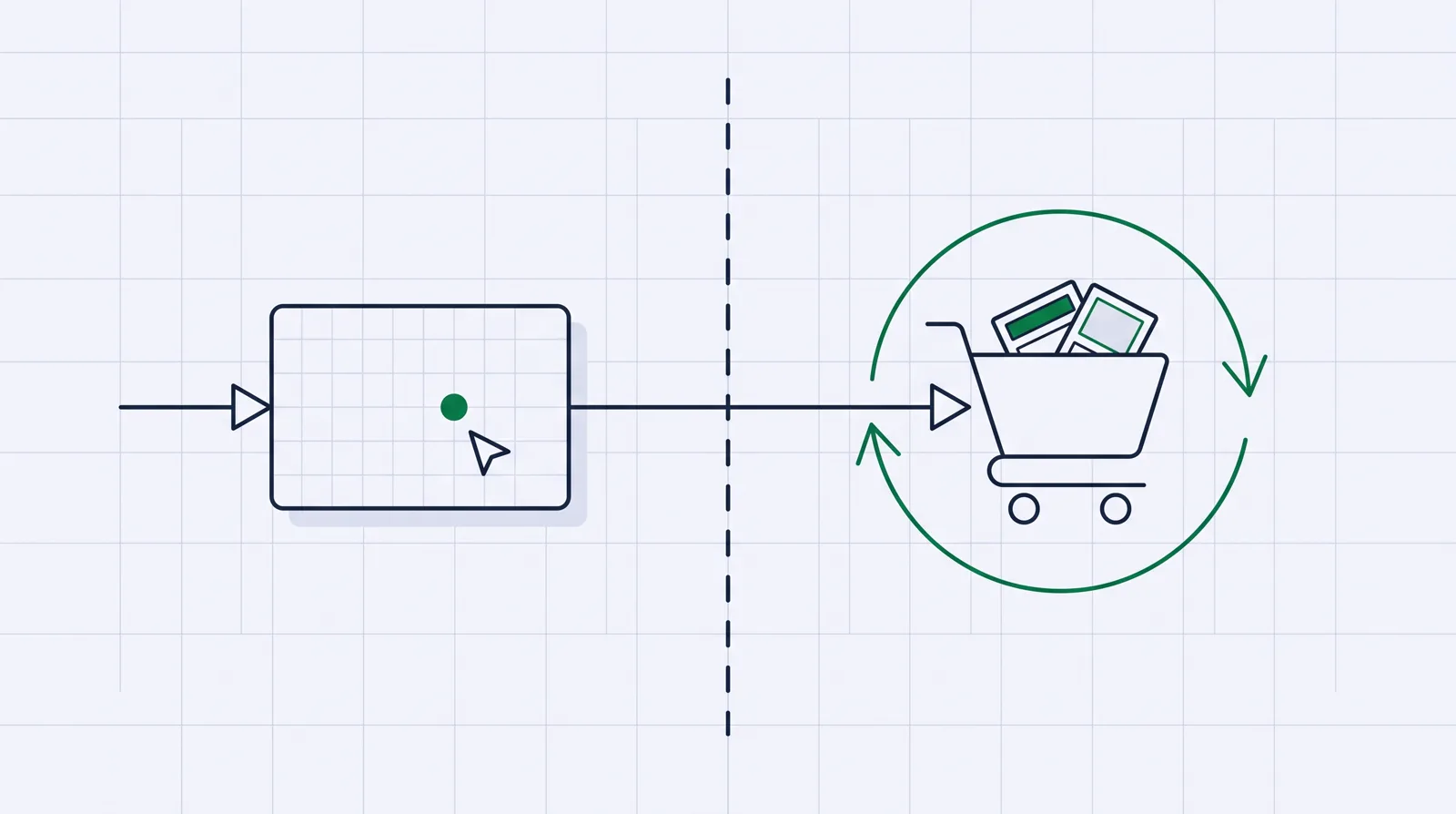
The reason this comparison feels lopsided is that the two products barely overlap. Landingi acts before the buy decision, on the page. Checkout Champ acts after it, on the cart and the rebill. If a campaign gets clicks but few conversions, the fix is on the page, and that is Landingi's ground. If the page already converts and the average order is too small, the fix is in the checkout, and that is Checkout Champ's ground. Naming your real bottleneck answers the question faster than any feature list will.
If you want the page and the checkout on one record
ElasticFunnels is a funnel platform for teams running paid traffic, and it is the pick for the segment this comparison leaves open: the buyer who wants the page and the checkout in one system instead of a page builder wired to a separate checkout CRM. It builds the pages, including an AI builder that writes one from a prompt or clones one from a URL, and it split-tests variants under a single URL so Meta, Google and TikTok keep their learning and a test never sends the ad back through review. It hosts the checkout with order bumps, one-click upsells, subscriptions and multi-account routing, and it keeps the click, the order, the rebill and the refund on one timeline with a CRM, automations and a call center on the same data. Multi-account routing matters most to sellers who hold more than one merchant account. A seller on a single Stripe or NMI account still gets the pages, the same-URL tests, the checkout and the attribution.
ElasticFunnels is newer than both Checkout Champ and Landingi, and there is very little independent third-party review coverage to check its claims against, which is what you would expect of a platform this recent beside an established page builder and an established direct-response platform. Until you run real volume through it you are largely taking the vendor's word for how it holds up. The 14-day trial takes no card, every feature is on every plan, and Starter is $97 a month, so the cheapest way to settle it is to build a page, wire the checkout and watch the reporting on your own funnel. Revenue through an ElasticFunnels-hosted checkout carries a 0.5% fee, and sales on outside platforms and networks carry none. It does not match Checkout Champ's 270-plus gateway ecosystem, and it costs more than a cheap standalone page builder like Landingi.
Which one for you
You need a cheap page to point PPC and lead-gen traffic at: Landingi. A $29 entry plan with A/B/X testing included, 400-plus templates and an AI generator get a page live fast and keep the bill small. Accept the rigid editor and the mobile cleanup, and watch the $5 add-on domain billing after you cancel.
You already sell at volume and the checkout is where your margin lives: Checkout Champ. Order bumps, one-click upsells, subscriptions and multi-account payment routing are what you are paying for. Book the demo only after pricing the 1% fee, the add-ons, the server-side tracking work and separate chargeback coverage.
You want the page and the checkout on one record: look at ElasticFunnels alongside them, with the newness caveat in mind, but only if you genuinely want one platform to own both halves rather than a hosted page you point ads at.
How we reached the verdict
We read each vendor's current pages and pricing, then long-term user reports and review-site feedback for the things product pages do not show well: price pressure, support, the learning curve and the tracking work. We did not run live campaigns through either platform.
Checkout Champ
What works
- Built to raise order value at volume. On-page and pop-up order bumps, true one-click upsells, and dynamic upsell offers that change by product, with A/B/C/D split testing on pages, prices, products and upsell flows. This is the machinery a direct-response seller buys it for.
- Multi-gateway routing is the real separator. Intelligent billing logic spreads volume across 270+ gateways and merchant accounts, so you get redundancy if one account has a problem, and subscription billing runs on any account you connect with no extra platform fee. The digital-product carts on this site cannot do this.
- One CRM for many stores. Reporting and CRM run deep, you manage multiple storefronts and thousands of SKUs from a single dashboard, and there is a customer portal for subscription self-service and a documented API for headless setups. Reviewers single out the reporting depth.
- Hands-on setup support. Each account is assigned an account manager who can configure it with you on a kickoff call, and long-term users repeatedly praise the live support.
What to watch
- Access is by demo and quote, with no self-serve signup. Plans open at $300/mo plus 1% of gross sales, and add-ons like fraud screening, 3DS, consent management and account updater bill as separate line items. Keeping your account manager after the 60-day setup period is another monthly charge, so the all-in bill runs above $300.
- Tracking and attribution are on you. Sending paid traffic across custom landers, redirects and separate domains can drop click IDs and split cookies, so Meta and Google cannot match the conversion. Server-side tracking fixes it, and someone technical has to own that setup.
- Chargebacks are reported after they post and left for you to manage. The vendor's own FAQ recommends bringing a separate chargeback company, an added cost in the high-risk categories it otherwise suits.
- Thin independent proof. Public review volume is small, around a dozen G2 reviews with some marked incentivized, and the Reddit footprint is sparse. That is what you would expect of a specialist platform sold by demo, and it puts more weight on what the demo shows you on your own offers.
Landingi
What works
- 400+ templates and an AI page generator (Lunar) get a campaign page live fast, no developer needed
- Noticeably cheaper than Unbounce or Instapage for the same lead-gen and PPC job, with A/B/X testing included
- Server-side A/B testing, EventTracker behavioural analytics and 170+ integrations from the mid Optimize tier
- Flexible publishing: your own domain, a WordPress plugin, Landingi hosting or your own server
- Support gets consistent praise on G2 and Capterra for a builder at this price
What to watch
- The editor is more rigid than Unbounce and mobile layouts often need manual cleanup, so it is not for pixel-level design work
- Add-on domains cost $5/mo each and keep billing after you cancel the core plan until the paid period ends, which has caught buyers out for months
- No smart traffic routing, and dynamic text and server-side testing sit behind higher tiers, so it is not the top PPC feature set
- Every plan has a monthly visit cap and AI features burn a credit allowance you can run out of
- Live chat is weekday Polish business hours only, so weekend high-spend campaigns wait for a reply
Pricing
Checkout Champ: from $300/mo + 1%. Access is by demo, with no self-serve free trial on the pricing page. Growth costs $300 a month plus 1% of gross sales processed through the platform. Enterprise is $300 a month with a volume-based reduction in that percentage. Standard payment-processor fees apply on top. Add-ons such as PAAY 3DS, Fraud Manager, Clym.io and Account Updater bill as separate line items. The EULA's Exhibit A also lists tiered percentage fees by monthly gross sales, plus a $0.05 charge per decline when the decline rate passes 20% in a billing period.
Landingi: from $29/mo. Annual rates: Build $24 a month for 10 active pages and 2,000 visits. Optimize $119 for 100 pages, 30,000 visits, EventTracker and server-side A/B testing. Scale from $229. Enterprise from $1,199. Annual billing includes two months free. Extra custom domains cost $5 a month each. The trial is capped at 200 visits, and Landingi says it may ask for a card.
Prices as of 12 October 2026
Our pick
Landingi
Landingi is the pick if you want a cheaper, template-driven landing page builder for PPC and lead-gen campaigns and you can live without Unbounce's dynamic text and smart routing. Watch the add-on billing.
Frequently asked questions
Which is cheaper, Checkout Champ or Landingi?
Can Landingi replace Checkout Champ?
Can Checkout Champ replace Landingi?
Is there an option that does both the page and the checkout?
Sources
Other sources
2 discussions and reviews read for this page. Quotes are excerpts; open a link to read the original in context.
- [capterra-sections] Landingi reviews
- [g2-mobile] Landingi reviews

Written by
Dana Rourke
Lead reviewer
Dana Rourke is the lead reviewer at Campaign Buyer. She owns the tracker and attribution coverage: reading what long-term users report about each tool, checking its documentation and pricing, and verifying prices with the vendor before writing the verdict. Keeping the rankings honest mostly means writing down what the top pick gets wrong, so she does that first.
Last checked 2026-09-29