Head-to-headmedia buyer software
Unbounce vs Instapage
By Dana Rourke, Lead reviewer. Reviewed by Campaign Buyer Editorial. Updated 8 September 2026.
Quick answer
Pick Unbounce if you buy Google Ads and need dynamic text replacement and automatic traffic routing; pick Instapage if you are an agency or enterprise team that needs collaboration and post-click personalization.
Side by side
| Tool | A/B testing | Dynamic text | Smart routing | Traffic caps | From |
|---|---|---|---|---|---|
| 1. Unbounce | –Unknown | –Unknown | –Unknown | –Unknown | $29/mo |
| 3. Instapage | –Unknown | –Unknown | –Unknown | –Unknown | $99/mo |
Both are premium landing-page builders, and both have drifted upmarket, so the real question is what kind of buyer you are.
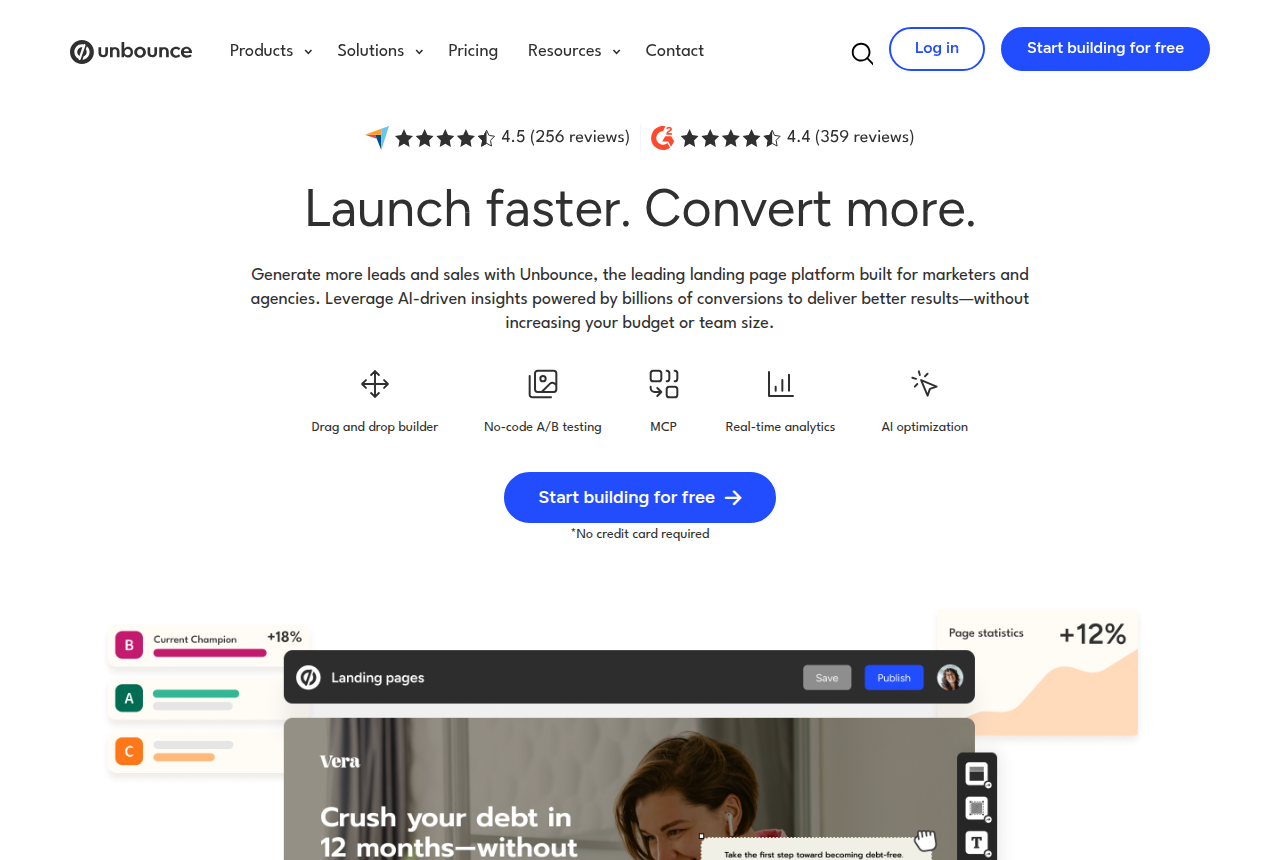
Unbounce is the PPC specialist. Dynamic text replacement matches the page headline to the search query, and its auto-routing sends visitors to the best-converting variant. For a Google Ads buyer, those are the two features that move conversion rate, and both are included from the Experiment tier up. The builder draws complaints about layout and mobile editing, but the optimization tools are the reason to be here.
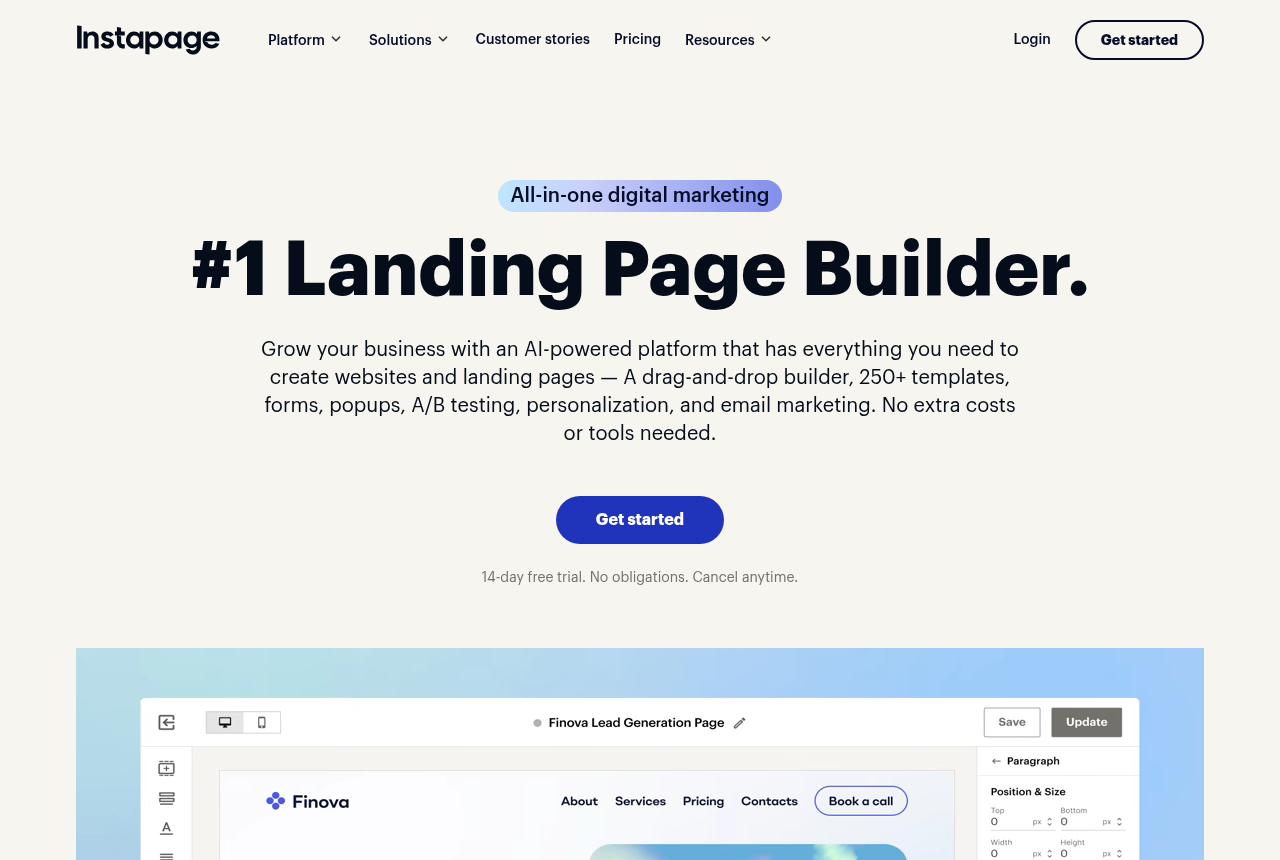
Instapage is the team platform. Its edge is collaboration and approval workflows, server-side A/B testing, and ad-to-page personalization through AdMap. An agency running pages for many clients gets real value from that governance, and its pricing climbs toward a custom-quoted top tier, with visitor caps on the plans below it.
For a media buyer optimizing their own paid traffic, Unbounce is our pick, because matching the page to the search term earns more than review workflows a solo buyer will never open. Choose Instapage when the bottleneck is the team and its sign-off process.
Unbounce
What works
- The page headline updates to match each search query, the core PPC lever
- Smart Traffic routes each visitor to the variant most likely to convert them
- A large template library and a mature builder
What to watch
- Dynamic text and split testing start on the $149/mo Experiment plan, about five times the $29 Starter price
- Monthly unique-visitor caps bring overage anxiety at scale
- The builder frustrates on fixed-section layout and mobile, enough that some users call it painful
Instapage
What works
- Strong collaboration and approval workflows for teams and clients
- Server-side A/B testing and multi-step forms from the Optimize tier
- Ad-to-page personalization (AdMap) at the top tier
What to watch
- Priced for enterprise: the $99 entry rises fast and Convert is custom-quoted
- Visitor caps on the Create and Optimize plans
- Overkill for a solo buyer or a small lead-gen shop
Pricing
Unbounce: from $29/mo. Monthly prices: Starter $29 for 5 pages and 500 visitors. Build $99 for unlimited pages and 20,000 visitors. Experiment $149 adds unlimited A/B testing and dynamic text replacement, with 30,000 visitors. Optimize $249 adds AI traffic optimization and 50,000 visitors. Yearly billing saves 25%. Pages keep running past the traffic limit, and the extra visitors are billed as a one-time overage fee. There is no native checkout.
Instapage: from $99/mo. Create is $99 monthly or $79 per month billed annually for 15,000 monthly visitors. Optimize is $199 monthly or $159 per month billed annually for 30,000 monthly visitors and adds server-side A/B testing. Convert uses custom pricing.
Prices as of 12 October 2026
Our pick
Unbounce
Unbounce is the pick if you buy Google Ads and live or die on message match, and you can justify the Experiment tier.
Frequently asked questions
Which is cheaper, Unbounce or Instapage?
Sources
Other sources
5 discussions and reviews read for this page. Quotes are excerpts; open a link to read the original in context.
- [hn-good-experience] Ask HN: Best landing page builder?
- [hn-nontechnical] Ask HN: Best landing page builder?
- [capterra-campaigns] Unbounce reviews
- [capterra-mobile] Unbounce reviews
- [trustpilot-value] Unbounce reviews

Written by
Dana Rourke
Lead reviewer
Dana Rourke is the lead reviewer at Campaign Buyer. She owns the tracker and attribution coverage: reading what long-term users report about each tool, checking its documentation and pricing, and verifying prices with the vendor before writing the verdict. Keeping the rankings honest mostly means writing down what the top pick gets wrong, so she does that first.
Last checked 2026-09-08