Head-to-headmedia buyer software
Anstrex vs Foreplay
By Dana Rourke, Lead reviewer. Reviewed by Campaign Buyer Editorial. Updated 23 September 2026.
Quick answer
Pick Anstrex if you run native or push affiliate campaigns on Taboola, Outbrain or MGID and need to find and rip competitors' advertorials and landing pages; pick Foreplay if you run Meta and TikTok creative and need to save competitor ads into organized swipe files and turn them into briefs your team can build from.
Side by side
| Anstrex | Foreplay | |
|---|---|---|
| What it is | Native and push ad spy database | Creative swipe and brief tool |
| Ad platforms it sees | Native and push (Taboola, MGID) | Meta, TikTok, LinkedIn, YouTube |
| Best at | Ripping native funnels | Organizing ads into briefs |
| Landing-page ripping | Yes, full advertorial rip | No |
| Competitor tracking over time | Basic | Yes, via Spyder |
| Team and brief workflow | No | Yes, its main draw |
| Entry price | $79.99/mo, per user | $59/mo, Workflow $175 |
Anstrex and Foreplay both help you learn from other people's ads, so a buyer choosing between them often assumes they are two versions of the same tool. They work differently. Anstrex is a database you search and rip from. Foreplay is a system you save into and brief from. Anstrex indexes native and push, the advertorial traffic that runs on Taboola, Outbrain and MGID, and its edge is pulling a competitor's whole funnel down to study offline. Foreplay indexes Meta, TikTok and the other social platforms, and its edge is keeping the ads you find organized and turning them into briefs your designers build from. Two things decide it: what traffic you actually run, and whether your bottleneck is finding the funnel or producing the next ad.
The one question that decides it: what traffic do you run?
Answer this before you compare a single feature. Anstrex sees native and push, and Foreplay does not. Foreplay sees Meta and TikTok, which Anstrex was never built to cover. So the first cut is where your money goes. If you buy native or push and your competitors run advertorials on Taboola, Outbrain and MGID, only Anstrex keeps a searchable record of them. If you buy Meta and TikTok, your competitors' creative lives in those ad libraries, and Anstrex's native archive has nothing you can use. Match the tool to your traffic first, and the rest of this comparison is detail.
There is a second fork underneath the first. Even among buyers on the same channel, these two solve different halves of the job. Anstrex is a research and teardown tool: it finds the ad and the funnel behind it. Foreplay is a production tool: it keeps what you found and helps a team turn it into the next ad. A solo native affiliate validating an offer is usually stuck on the first half. A DTC brand with a designer, a media buyer and a founder all weighing in is usually stuck on the second.
Anstrex: the native and push specialist
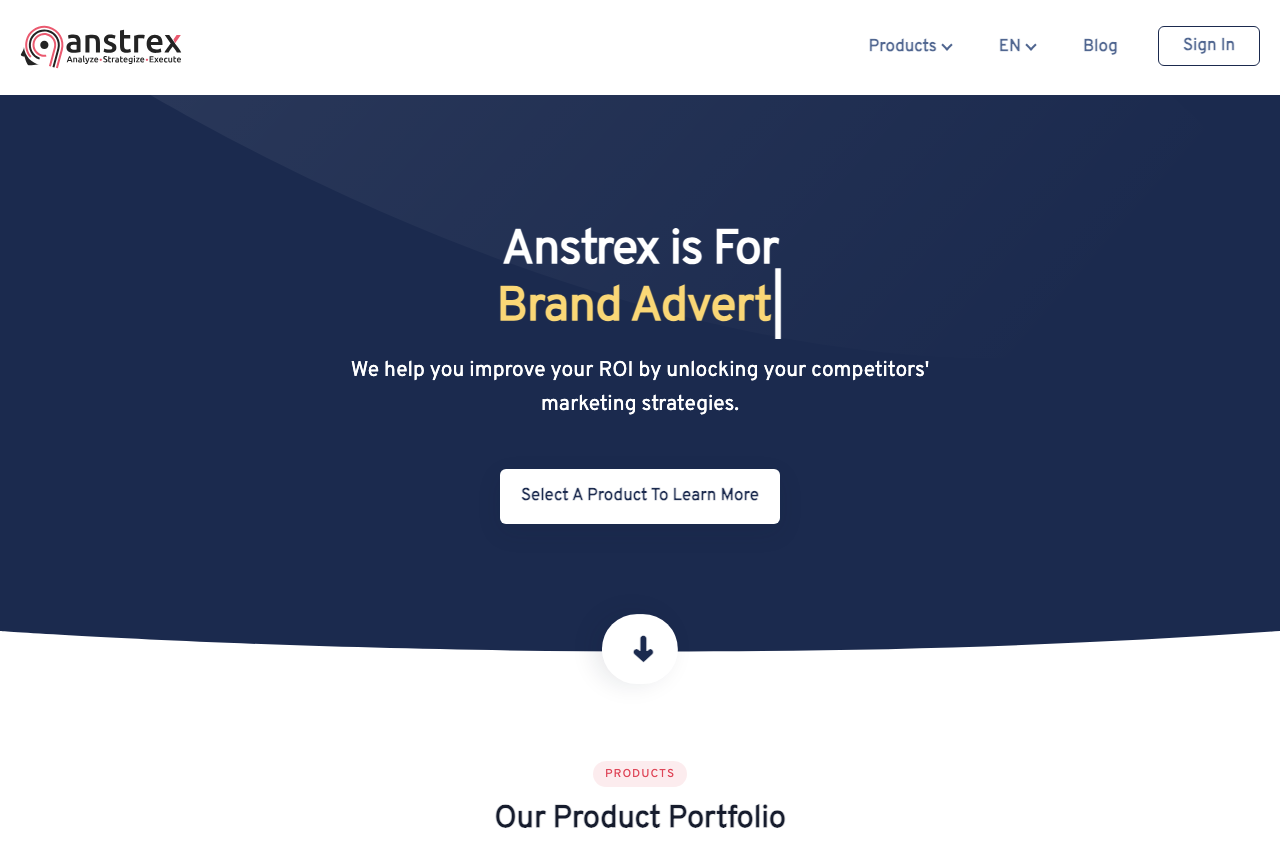
If your traffic comes from Taboola, Outbrain or MGID, Anstrex is the one built for the job. Anstrex Native covers 27-plus native networks across dozens of countries, and a separate product covers push and pop traffic. Its standout is landing-page ripping: it downloads a competitor's advertorial and presell page so you can pull the whole funnel apart offline, from the headline down to the offer. For native affiliates that full path is the core workflow, and Anstrex is built around it. Nothing in this pair comes close on native.
Its weak spot is Facebook and Instagram, where a Meta-first buyer will find it thin on the ads they care about, and the interface is laid out for performance affiliates. Every seat is priced separately, so the bill for a two- or three-person team grows quickly, and the push or pop add-on costs more again.
Foreplay: the creative operations system
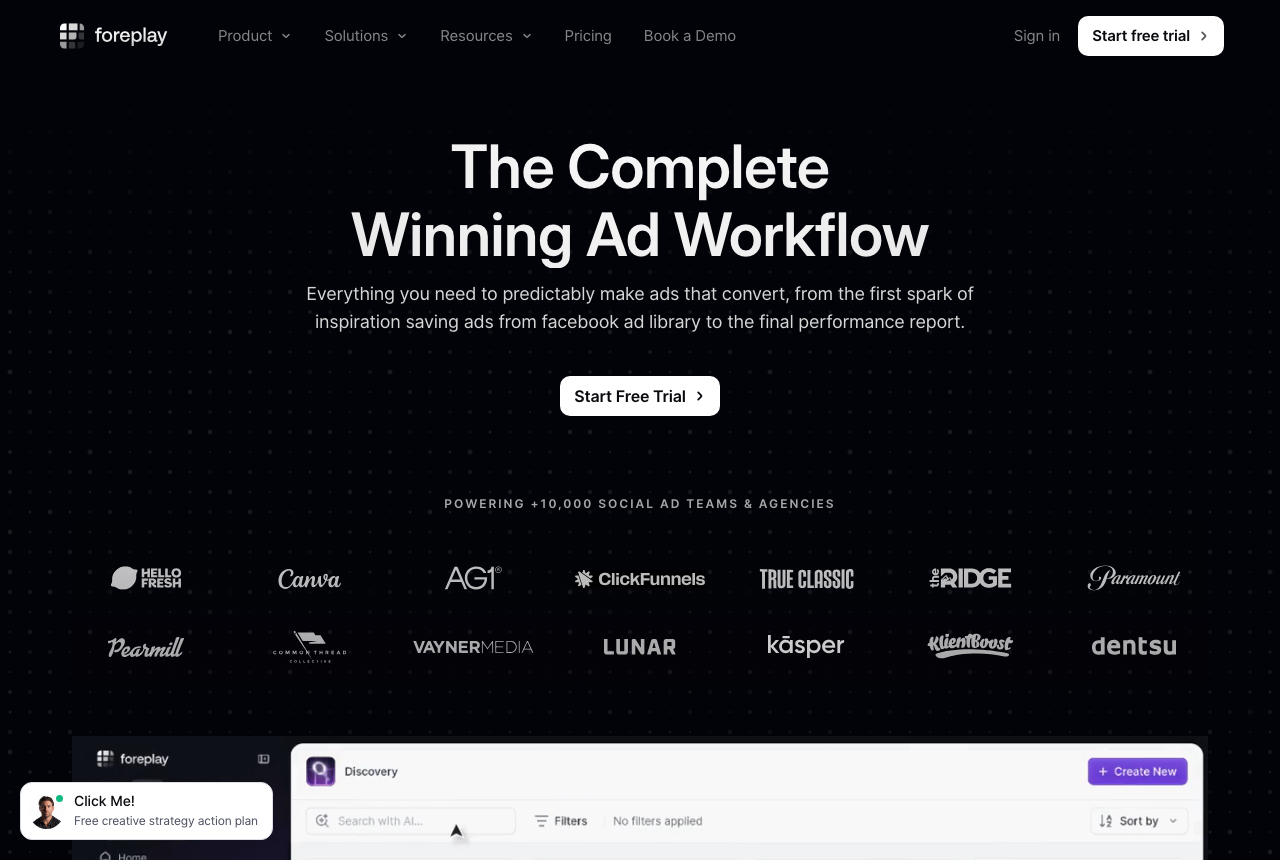
Foreplay works more like a creative operations system than a spy tool. You save ads into organized swipe files, track competitors over time, and turn what you find into briefs your designers actually build from. It pulls inspiration from Meta, TikTok, Instagram, LinkedIn, YouTube Shorts and Google's Transparency Center. DTC teams consistently praise it for the organization as much as the discovery, and its 4.8 out of 5 across 127 G2 reviews is unusually strong for this category.
It is built for a team. Its Spyder feature watches competitors so their new ads surface as they run, and Briefs turns a board of references into a production-ready spec a designer can build from. The limit that matters is cost: those team features live on the Workflow tier, Basic is a lighter saved-ads library, and each added seat raises the bill.
Coverage: native depth versus paid-social breadth
This is where the two split most cleanly, and it maps straight onto the traffic question. Anstrex goes deep on native and push, with an archive and a page ripper that Foreplay has no equivalent for. Foreplay goes wide across Meta, TikTok, Instagram, LinkedIn, YouTube Shorts and Google's Transparency Center, all saved into one library. They barely overlap. If every dollar you spend goes to native, Anstrex's depth is what you are paying for, and Foreplay's breadth covers channels you do not buy. If you run Meta and TikTok creative, Foreplay sees both. A Meta-first buyer who wants a searchable ad database instead of a swipe system is really looking at a tool like AdSpy, which is a different comparison.
The capability each has that the other lacks
Set the platforms aside and each tool still does one thing the other never attempts. Anstrex rips landing pages. It downloads the advertorial and the presell page whole, so you can study the funnel a competitor runs behind the creative. Foreplay leaves pages alone, because its users are producing ads for their own brand. Foreplay, in turn, briefs. Spyder tracks a competitor over time and Briefs turns a swipe board into a spec your designer builds from, a workflow Anstrex skips because its typical user is one affiliate hunting for an angle. If your work is tearing apart native funnels, Anstrex's ripper decides it. If your work is producing paid-social ads at volume with a team, Foreplay's briefing loop decides it.
Pricing: a per-user native fee versus a tiered workflow
The two charge for different things. Anstrex's native plan is priced per seat, so a solo affiliate pays the listed fee while a small team multiplies it, and push or pop coverage adds another plan. Foreplay opens lower with Basic, but competitor tracking and the team workflow sit on the pricier Workflow plan, with extra seats charged on top. A solo buyer who only needs the saved-ads library pays least on Foreplay. A native affiliate on one seat gets a flat, predictable Anstrex bill. Anstrex states in its FAQ that it has no free trial, offers a demo instead and does not refund for dissatisfaction, so a wrong pick there costs a full month. Foreplay offers a 7-day trial. Work out both bills on your real team size before you sign up.
What neither tool does
A spy tool rips a funnel and a swipe tool briefs an ad, but neither builds the page and checkout behind the ad, and neither tells you which angle actually made money after the click. Once Anstrex hands you a competitor's advertorial or Foreplay hands your designer a brief, the next steps are yours: building the landing page and checkout, split-testing the variant, and measuring the spend against the sales. Those usually mean another tool on another bill. ElasticFunnels is one platform that covers that middle. Its AI page builder writes a page from a prompt or clones a competitor URL into an editable copy, which fits neatly after a teardown, and it runs same-URL split tests and reports ad spend against conversions on one timeline. It offers a 14-day free trial with no card.
Its drawback is that it is newer than the tools on this page, with very little independent review coverage to check its claims against, so until you run real volume through it you are largely relying on the vendor's word for how the reporting and split testing hold up. That is what you would expect of a platform this young, and the builder, the cloner and the reporting can all be tried inside the trial. Keep it on its own line of the decision: for sourcing native funnels or paid-social creative, Anstrex and Foreplay remain the direct answer.
Which one for you
You run native or push affiliate campaigns: Anstrex. It is the only one of the two that can see Taboola, Outbrain and MGID, and the landing-page ripper is worth the subscription on its own for tearing down competitor funnels. Book the demo first to confirm your networks and geos are covered, then commit to one month, because there is no refund.
You run a creative team producing Meta and TikTok ads: Foreplay. Swipe files, competitor tracking through Spyder and Briefs are built for exactly that workflow. Start on the trial, and budget for the Workflow tier, since that is where those features live.
You buy native and also produce paid-social creative: you will end up running both, at least while researching each channel, because they watch different traffic.
You have the angle and now need to build and measure the funnel: look at ElasticFunnels alongside them, with its newness in mind, and judge it on that separate job.
Foreplay gets our default pick because more of this site's readers buy Meta and TikTok than buy native, so it is the tool the larger group needs. On its own native turf, Anstrex is plainly the better fit.
Anstrex
What works
- Purpose-built for native and push across 27+ networks
- Landing-page ripping and advertorial research for affiliate funnels
- Cheaper than high-end native intelligence platforms
What to watch
- Priced per user, so a team adds up fast
- Weak for Facebook creative strategy
- The interface is laid out for performance affiliates working native funnels
Foreplay
What works
- Saves and organizes competitor ads from every major ad library
- Briefs and Spyder turn inspiration into production-ready references
- A 4.8/5 rating across 127 G2 reviews, strong for the category
What to watch
- No Taboola or Outbrain coverage, so native buyers need Anstrex
- Competitor tracking and team features sit on the $175/mo Workflow tier
- Extra seats are billed per user
Pricing
Anstrex: from $79.99/mo. Native only $79.99/user a month, native plus push $139.99, native plus push and pops $219.99. Covers 27+ networks across 64+ countries. Billed per user.
Foreplay: from $59/mo. Basic at $59, Workflow at $175 and Agency at $459 a month (annual $49/$149/$389). Additional seats cost $20. Covers Meta, TikTok, Instagram, LinkedIn, YouTube Shorts and Google's Transparency Center.
Prices as of 8 September 2026
Our pick
Foreplay
Foreplay is the pick if you are a DTC creative team that needs to turn competitor research into swipe files and briefs your designers can use.
Frequently asked questions
Which is cheaper, Anstrex or Foreplay?
Do Anstrex and Foreplay do the same thing?
Does Foreplay cover native ads like Anstrex?
Is there a free trial for Anstrex or Foreplay?
Sources
Other sources
2 discussions and reviews read for this page. Quotes are excerpts; open a link to read the original in context.

Written by
Dana Rourke
Lead reviewer
Dana Rourke is the lead reviewer at Campaign Buyer. She owns the tracker and attribution coverage: reading what long-term users report about each tool, checking its documentation and pricing, and verifying prices with the vendor before writing the verdict. Keeping the rankings honest mostly means writing down what the top pick gets wrong, so she does that first.
Last checked 2026-09-23