By Dana Rourke, Lead reviewer. Reviewed by Campaign Buyer Editorial. Updated 25 September 2026.
Quick answer
Pick Anstrex if you run native or push affiliate traffic on Taboola, Outbrain or MGID and need to find and rip competitors' advertorials and landing pages; pick Minea if you sell physical products on Meta, TikTok or Pinterest and want ad spy plus winning-product and competitor-store research in one dashboard, as long as you treat what it finds as leads to validate.
Side by side
| Anstrex | Minea | |
|---|---|---|
| What it is | Native and push ad spy | Ecommerce spy plus products |
| Ad platforms | Native and push | Facebook, TikTok, Pinterest |
| Product research | No | Yes, products and stores |
| Meta and TikTok | No | Yes |
| LP ripping | Full advertorial rip | No |
| Free entry | Demo only, no trial | Free Lite plan |
| Entry price | $79.99/mo, per user | $49/mo, credit-metered |
Anstrex and Minea are both sold as ad spy tools, so a buyer choosing between them often assumes it is one product against another at two prices. In practice they watch different platforms and they are built for different buyers. Anstrex indexes native and push, the advertorial traffic that runs on Taboola, Outbrain and MGID, and its edge is pulling a competitor's whole funnel down to study offline. Minea watches Facebook, TikTok and Pinterest, and around the ads it stacks product and competitor-store research for someone selling physical goods. The decision is less about which is better and more about what you research, and where your money goes.
The one question that decides it: what do you research, and where?
Answer this before you compare a single feature. Anstrex sees native and push. Minea sees Meta, TikTok and Pinterest and adds product data. So the first cut is where your traffic lives. If you buy native or push and your competitors run advertorials on Taboola, Outbrain and MGID, only Anstrex keeps a searchable record of them, and an ecommerce paid-social tool is blind to the exact ads you need to study. If you sell products and buy on Meta, TikTok or Pinterest, your competitors' creative and their stores live in those channels, and Anstrex's native archive has nothing you can use.
That is why sticker price is a poor way to choose here. A native affiliate who saves money on Minea has bought a tool that cannot see their channel at all. A dropshipper who pays a per-seat native fee for Anstrex has bought depth on advertorial traffic they do not run and lost the product research that is half the reason they wanted a tool. Match the job first, and the rest of this comparison is detail.
Anstrex: the native and push specialist
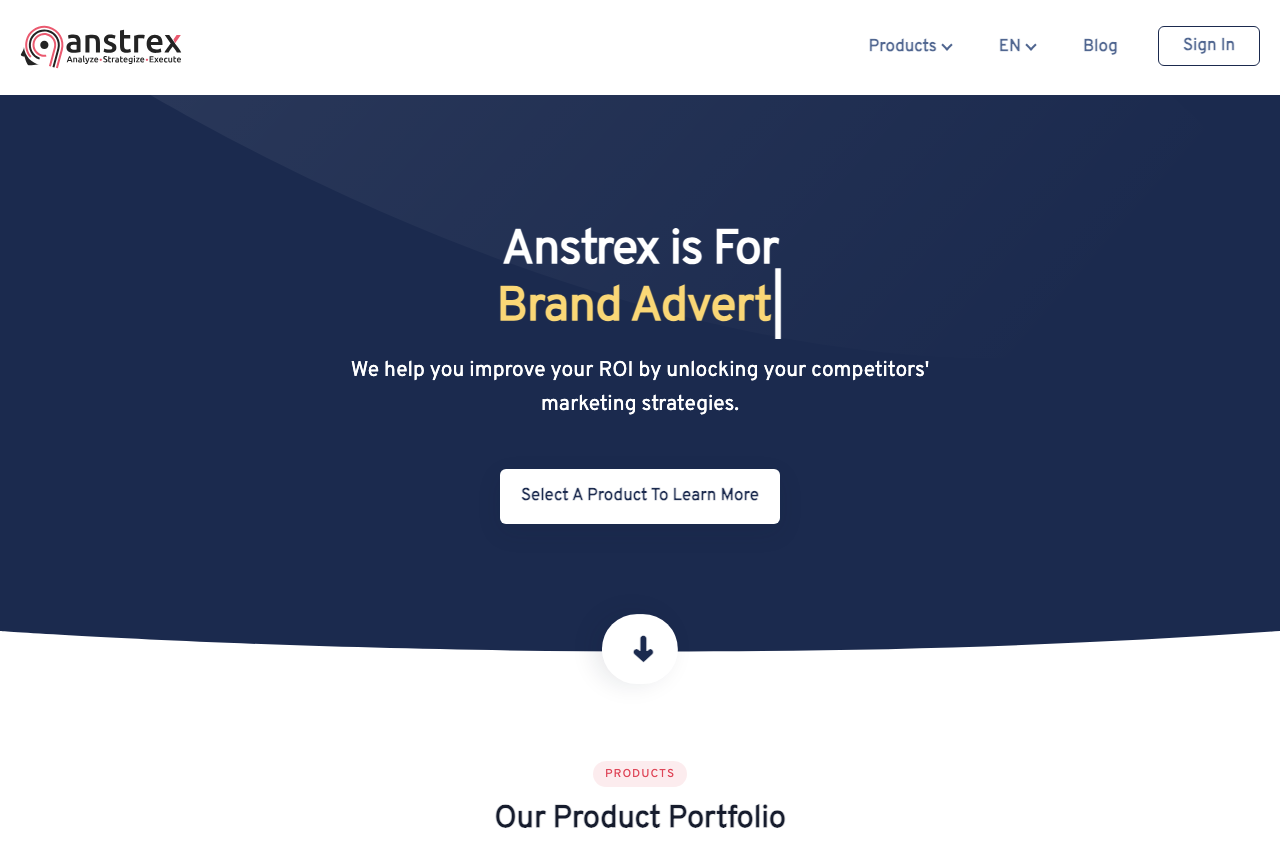
If your traffic comes from Taboola, Outbrain or MGID, a paid-social tool is useless to you, and Anstrex is the one built for the job. Anstrex Native covers 27-plus native networks across dozens of countries, and it runs a separate push product for push and pop traffic. Its standout is landing-page ripping: it downloads a competitor's advertorial and presell page so you can pull the whole funnel apart offline, from the ad to the offer. For native affiliates, reading the full path from headline to offer is the core workflow, and Anstrex is built around it. Nothing in this pair comes close on native.
The limit is reach: it is thin on Facebook and Instagram, and its interface is built for performance affiliates. Pricing is per user for native only, so a two or three person team stacks up faster than the sticker suggests, and bundling push or pop adds more on top. A Meta, TikTok or Pinterest buyer should look elsewhere.
Minea: ad spy plus product research for sellers
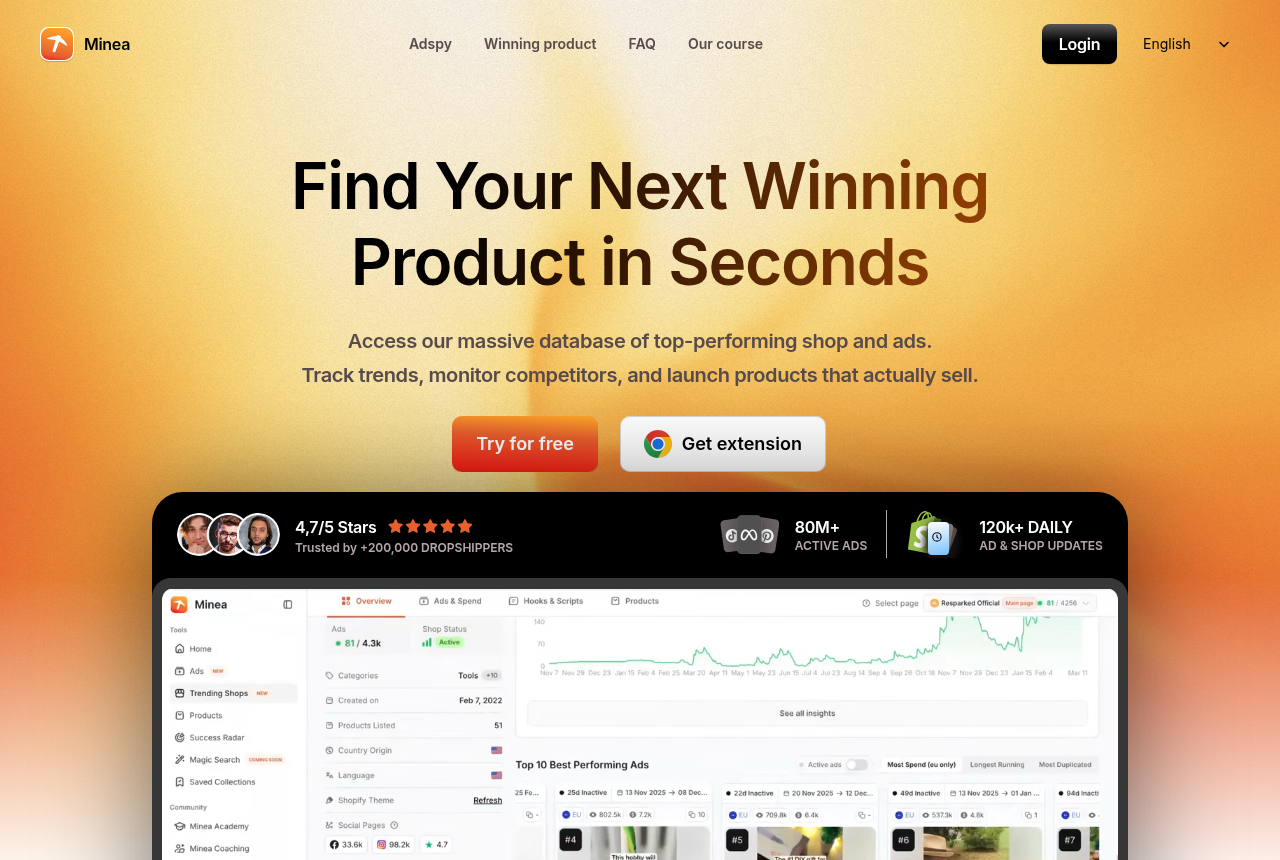
Minea is built for one buyer: someone selling physical products who wants ad spy and product research in the same place. It is a real product, built by a Swiss company, with a library of more than 80 million ads updated daily and a large paying dropshipping audience. It covers Facebook, TikTok and Pinterest, and around the ads it stacks winning-product lists, shop revenue estimates, a brand tracker and an image search for finding where a product is running. For a dropshipper, that combination is the appeal: find a product and see who else is on it without leaving the dashboard.
The regret with Minea is rarely capability. It is expecting it to hand you a guaranteed winner. Users report ads that feel recycled and engagement numbers that do not prove a product is profitable, so treat each product it surfaces as a lead. For a seller doing multi-platform product research, Minea is the better tool of the two, and we would pick it every time over a native-only archive for that job.
Coverage: native depth versus ecommerce breadth
This is where the two split most cleanly, and it maps straight onto the traffic question. Anstrex goes deep on one world Minea ignores entirely: native and push, with an archive and a ripper no one else in this pair matches. Minea goes wide across ecommerce paid social: Facebook, TikTok and Pinterest, with product and shop data attached. They barely overlap. If every dollar you spend goes to native, Anstrex's depth is worth everything to you. For a store owner buying on Meta or TikTok, Minea is the one that sees both the ads and the stores. A Meta-first buyer who wants a pure searchable ad archive rather than a product dashboard is really looking at a tool like AdSpy, which is a different comparison.
The capability each has that the other lacks
Strip the platforms away and each tool still has a job of its own. Anstrex rips landing pages. It downloads the advertorial and the presell page whole, so you can study the funnel a competitor is running behind the creative. Minea researches products and stores, because its users are validating something to sell. Winning-product lists, shop revenue estimates and a brand tracker answer a question Anstrex never tries to: what should I sell, and who is already selling it. If your work is tearing apart native funnels, Anstrex's ripper decides it. If your work is finding a product and sizing the competition, Minea's research decides it.
Pricing: a per-user native fee versus credits
On price the two are not really comparable, because they charge for different things. Anstrex bills native per user, so a solo affiliate pays the sticker while a small team multiplies it, and adding push or pop layers on more. Minea starts lower, with a free Lite plan, but every plan is metered by credits you burn as you search, scroll and open ad details, and the vendor can change what those credits cost. It auto-renews every 30 or 365 days with no refund on unused days, so you cancel at least 24 hours ahead or pay for the next period. On the headline number Minea is cheaper, and for a light or occasional user it stays that way. Search all day, every day, and the credit meter can push the real bill past Anstrex's flat native fee. Anstrex says in its own FAQ that it has no free trial, offers a demo instead, and does not refund for dissatisfaction, so a wrong pick there is a full month gone. Minea lets you test on the free Lite plan first.
What neither tool does
A spy tool finds you an angle. It does not build the funnel behind it. Once Anstrex hands you a competitor's advertorial or Minea hands you a product and the ads running it, the next steps are yours: building the presell page and checkout, and finding the variant that converts. That is a separate tool on a separate bill. ElasticFunnels is one platform that covers that middle: a landing page builder that generates a page from a prompt or clones a competitor URL into an editable copy, which fits neatly after a teardown, plus a hosted checkout and same-URL split testing with ad-spend and conversion reporting and affiliate postbacks attached, so the spend-to-sale numbers sit on one timeline instead of across separate exports. It runs a 14-day trial with no card. The honest limit is that it is newer than the tools on this page, and there is very little independent third-party review coverage to check its claims against, so until you run real volume through it you are largely taking the vendor's word for how the attribution and split testing hold up. The page builder, the cloner and the reporting are all usable from day one, so what is thin is the outside record. For an Anstrex user it is the step after a teardown, when the ripped advertorial becomes a presell of your own.
Which one for you
You run native or push affiliate campaigns: Anstrex. It is the only one of the two that can see Taboola, Outbrain and MGID, and the landing-page ripper is worth the subscription on its own for tearing down competitor funnels. Book the demo first to confirm your networks and geos are covered, then commit to one month, because there is no refund.
You sell physical products and want product research too: Minea. It covers the platforms a modern seller actually runs, TikTok and Pinterest included, and puts product and store research beside the ads. Start on the free Lite plan and run your own test ads on anything its product lists flag.
You buy native and also sell products on paid social: you will likely need both. Anstrex is the native funnel ripper and Minea is the ecommerce research dashboard, and they see different channels, so a buyer active on both runs both, at least while researching each.
You have the angle and now need to build and measure the funnel: look at ElasticFunnels alongside them, with the newness caveat above in mind, but keep it separate from the spy-tool decision, because it does a different job.
Minea is our default pick because more of this site's readers sell products and buy paid social on Meta and TikTok than buy native or push, so it is the tool the larger group here actually needs. For a native or push buyer, Anstrex is plainly the better fit.
Anstrex
What works
- Purpose-built for native and push across 27+ networks
- Landing-page ripping and advertorial research for affiliate funnels
- Cheaper than high-end native intelligence platforms
What to watch
- Priced per user, so a team adds up fast
- Weak for Facebook creative strategy
- The interface is laid out for performance affiliates working native funnels
Minea
What works
- Covers Meta, TikTok and Pinterest ads plus product and shop data in one ecommerce-focused dashboard
- A free Lite plan lets you test the interface before paying, and paid plans start at $49 a month
- Brand tracker, daily niche lists and a Magic image search speed up finding and organising angles
- 80M+ ads with daily updates, deep enough for competitor and store research
What to watch
- No native or push networks, so Taboola, Outbrain and MGID buyers still need Anstrex
- Users report ads that feel recycled or stale, and engagement numbers that do not prove a product is profitable
- Every plan is metered by credits you spend as you search and scroll, and Minea can change credit costs at will
- Auto-renews every 30 or 365 days with no refund on unused days, so you have to cancel at least 24 hours before renewal
Pricing
Anstrex: from $79.99/mo. Native only $79.99/user a month, native plus push $139.99, native plus push and pops $219.99. Covers 27+ networks across 64+ countries. Billed per user.
Minea: from $49/mo. Starter costs $49 a month, Premium $99 and Business $199. Each is about 20% cheaper billed quarterly and lower again billed annually. A free Lite plan gives limited access. Every plan is metered by credits you spend as you search and scroll ads. Subscriptions renew every 30 or 365 days, and you must cancel at least 24 hours before renewal. Minea refunds no unused days or credits. A new user can get a refund within 24 hours of a first purchase.
Prices as of 8 September 2026
Our pick
Minea
Minea is the pick if you sell physical products and want Facebook, TikTok and Pinterest ad spy plus product and competitor-store research in one dashboard, as long as you validate each find before you spend on it.
Frequently asked questions
Which is cheaper, Anstrex or Minea?
Do Anstrex and Minea do the same thing?
Does Minea cover native ads like Anstrex?
Is Minea good for dropshipping?
Is there a free trial for Anstrex or Minea?
Sources
Other sources
5 discussions and reviews read for this page. Quotes are excerpts; open a link to read the original in context.
- [ecom] We tried in 2025 for ad research (GetHookd, Minea, BigSpy, Foreplay)
- [decline] What ad spy platform are you using?
- [stale] Minea reviews
- [metrics] Minea reviews
- [current] Minea reviews

Written by
Dana Rourke
Lead reviewer
Dana Rourke is the lead reviewer at Campaign Buyer. She owns the tracker and attribution coverage: reading what long-term users report about each tool, checking its documentation and pricing, and verifying prices with the vendor before writing the verdict. Keeping the rankings honest mostly means writing down what the top pick gets wrong, so she does that first.
Last checked 2026-09-25