Landing pages vs platformmedia buyer software
Unbounce vs GoHighLevel
By Dana Rourke, Lead reviewer. Reviewed by Campaign Buyer Editorial. Updated 30 September 2026.
Quick answer
Pick Unbounce if you buy paid traffic and need a specialist landing-page platform for message match, A/B testing and visitor routing while your CRM, email and checkout stay where they are; pick GoHighLevel if you want to run all of your marketing, or several clients' marketing, from one login: a CRM, funnels, email, SMS and voice, automations, and the option to white-label the platform and resell it.
Side by side
| Unbounce | GoHighLevel | |
|---|---|---|
| What it is | Landing-page and CRO platform | Agency marketing platform |
| Best for | Paid-traffic landing pages | Agencies and consolidators |
| Landing pages | Drag and drop, 100+ templates | Funnel and site builder |
| Message match | Dynamic text from Experiment | No dynamic text replacement |
| Split testing | A/B from Experiment | Basic A/B in funnels |
| Traffic routing | Smart Traffic on Optimize | None |
| CRM | None | Full CRM and pipelines |
| Email and SMS | No native sending | Email, SMS and voice |
| Automation | No workflows | Workflows and triggers |
| Manage clients | Not its job | Per-client sub-accounts |
| White-label resale | No | Yes, on $497 tier |
| Running cost | Plan plus visitor caps | Plan plus usage fees |
| Free trial | 14 days, no card | 14 days |
| Entry price | $29/mo ($149 for A/B) | $97/mo plus usage |
If you have narrowed the whole market to Unbounce and GoHighLevel, the first thing to say is that these two do very different jobs. Unbounce builds and optimizes landing pages for paid traffic, and stops at the page. GoHighLevel is a full marketing platform: a CRM with pipelines, a funnel and website builder, email, SMS and voice, automations, and the option to white-label the whole thing and resell it to clients. Unbounce sells you a sharper campaign page, and GoHighLevel sells you the back office of a marketing business.
So the choice turns on how much of the business you want one login to run. Get it wrong and you either pay for a machine you never learn, or you outgrow a page tool the week you need to nurture a list. Settle that split before you compare a single feature.
Campaign pages, or a whole platform?
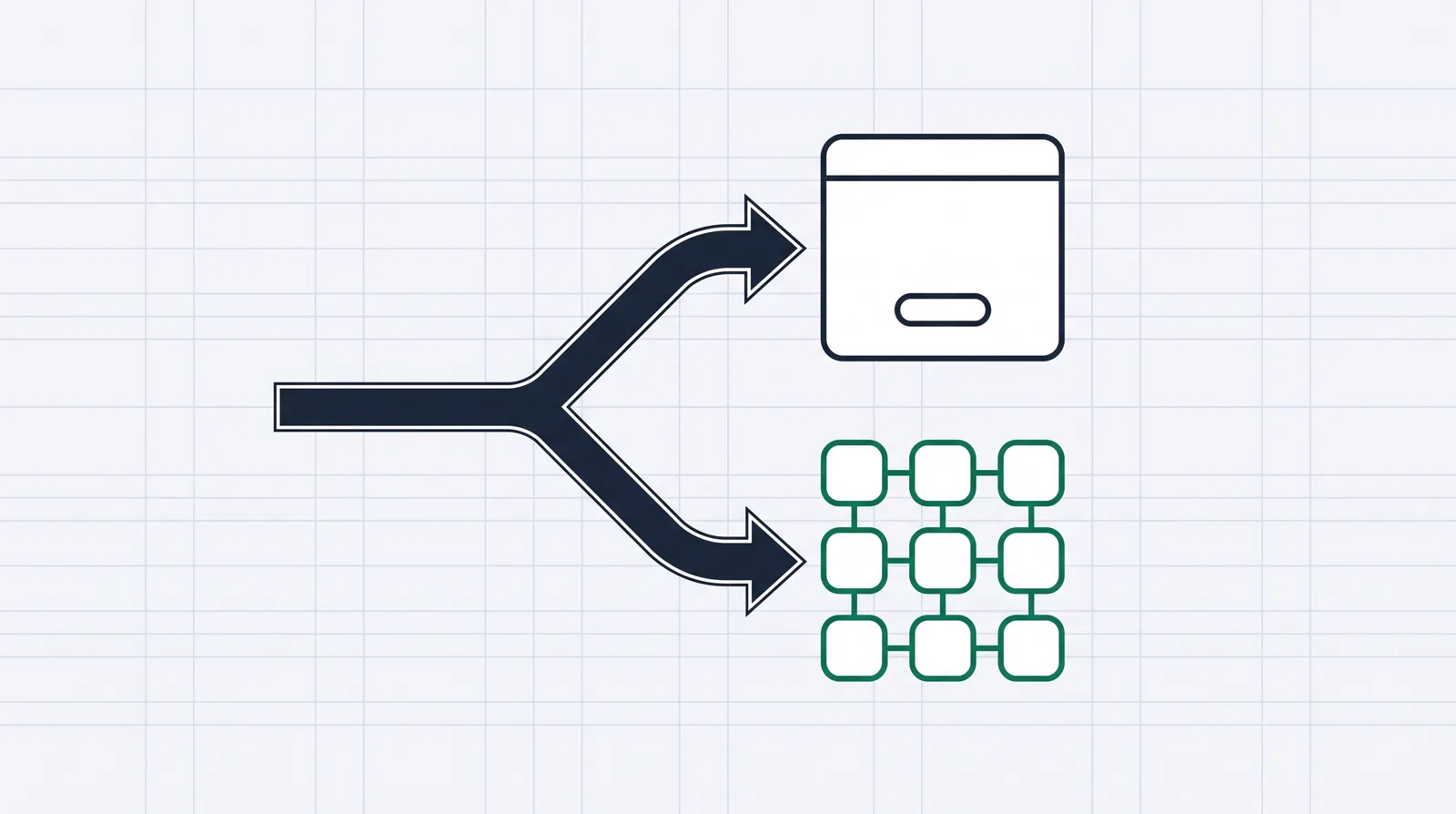
If what you need is high-converting campaign landing pages, with the headline matching the ad or keyword, A/B testing to prove a variant, and routing to send each visitor to the version most likely to convert, and your CRM, email and checkout already live somewhere else, you are Unbounce's buyer. If you want to run all of your marketing, or several clients' marketing, from one account, with a CRM at the center, automated email and SMS follow-up, and the option to rebrand and resell the platform, you are GoHighLevel's buyer.
The rest follows from that answer. Unbounce will not store a contact database or send an SMS sequence. GoHighLevel will build a page, but the page is one module hanging off a platform you are really buying for the CRM and the automation, and it lacks the paid-search message-match features Unbounce is known for. The failure mode is buying the one built for the other person.
Unbounce: the paid-traffic page specialist
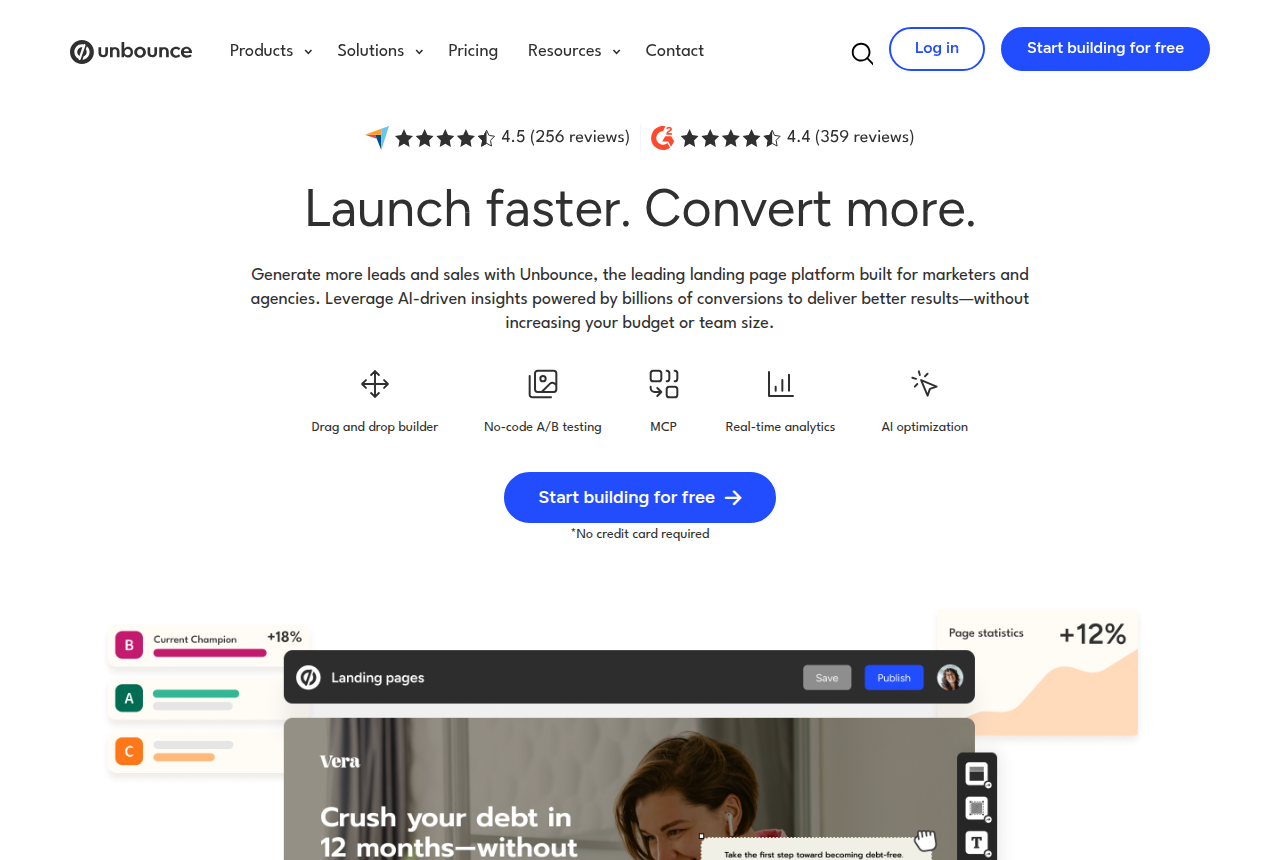
Unbounce is a landing-page and conversion optimization platform aimed at marketers and agencies who buy traffic. Its strength is the page: a drag-and-drop editor, more than 100 templates, custom code, forms, popups and sticky bars, plus the three features that make it distinct for paid campaigns. Dynamic text replacement changes the page copy to match the keyword or ad that produced the visit, which keeps the promise in the ad aligned with the page. A/B testing lets you prove one variant against another. Smart Traffic reads visitor attributes and routes each person toward the variant it expects will convert them.
The catch is where those features live. The $29 Starter plan covers a handful of pages and 500 monthly visitors and is too small for paid campaigns. Headline matching and A/B testing start on the $149 Experiment plan, and Smart Traffic on the $249 Optimize plan, so price the tier that carries what you came for rather than the sticker. Beyond the plans, the recurring gripes from long-term users are monthly visitor caps that bring overage anxiety at scale, price increases over the years, and an editor some find rigid once a design pushes past standard sections or needs careful mobile work.
What Unbounce does not do is everything after the page. It can send a form submission to HubSpot, Salesforce or another connected system, and it can pass a buyer onward to a checkout, but it has no CRM, no pipelines, no native email or SMS, no automations and no client sub-accounts. Its analytics stop at the page conversion. When those jobs already live in a stack you intend to keep, that boundary costs you nothing, and it is the exact boundary GoHighLevel is built to cross.
GoHighLevel: an agency operating system
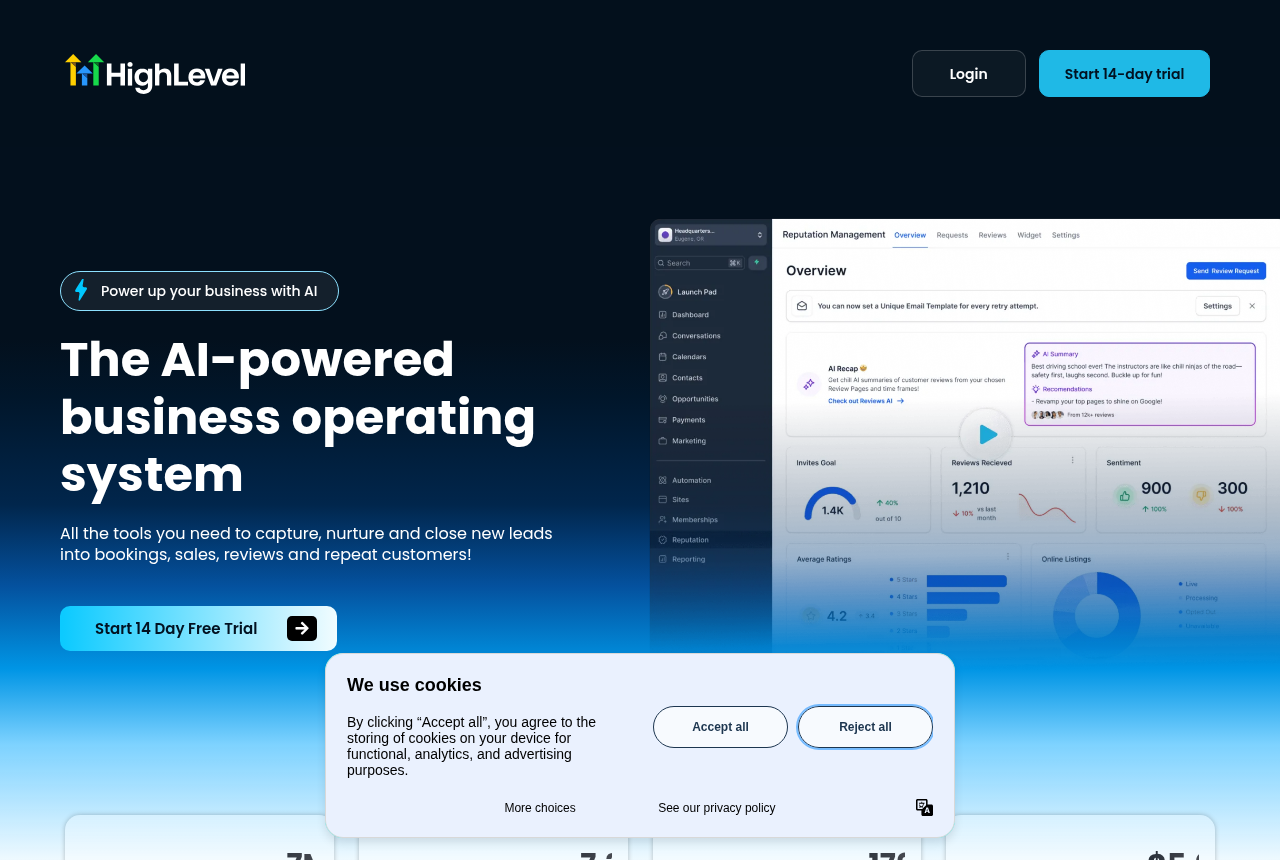
GoHighLevel, now usually branded HighLevel, is best understood as an operating system for a marketing business. It bundles a CRM with pipelines, a funnel and website builder, email, SMS and voice, calendars, reputation management, automations, courses and payments, and it can run all of it per client through sub-accounts. Where Unbounce is built around the page, GoHighLevel is built around the contact database, with the page as one module among many.
Two things make it a platform rather than a bigger page tool. First, consolidation: long-term users say the value shows up when it retires three to six other subscriptions. Contacts and users are unlimited on every plan, and sub-accounts are unlimited from $297, so the bill does not climb with your client count the way a per-seat CRM does. Second, resale: the $497 Agency Pro plan turns on SaaS Mode, which lets you rebrand the platform as your own software, auto-create client accounts, and rebill phone, SMS and email usage with your markup. No single-purpose page tool offers that.
The costs show up in three places. Email deliverability is fragile on the shared sending pool: users report open rates falling and mail landing in spam even with SPF, DKIM and DMARC set correctly, and serious senders move to a dedicated SMTP or IP. Reliability wobbles across modules, and the vendor's own status page logged repeated 2025 incidents affecting workflows, forms, SMS and email. The learning curve is steep, and phone, SMS, email and premium AI are usage-based on top of the subscription, so the sticker is not the whole bill. That machinery pays off for an agency and is overhead for a solo media buyer who only wanted a sharper landing page.
Where they overlap, and where they don't
They share one job: both can build a landing page and run a basic A/B test. Even there Unbounce brings keyword-matched headlines and Smart Traffic, which GoHighLevel does not, while GoHighLevel's page builder is a component of a funnel system rather than a specialist CRO tool. For a paid-search or paid-social page where message match is the lever, Unbounce is the sharper instrument.
The gap is everything after the page. Unbounce hands the lead or the buyer to whatever you use to nurture and sell. GoHighLevel keeps the lead, scores it in a pipeline, and follows up by email, SMS and voice on an automation you build once. So ask whether you want a tool that captures a conversion and stops, or a platform that captures a lead and then runs the entire relationship.
A third option for a paid-traffic seller
Both Unbounce and GoHighLevel assume the hard part is either the page or the client relationship. If you buy your own paid traffic to make sales, the hard part is often somewhere neither of them looks: the split test that must not reset the ad platform's learning, and the checkout that turns a click into a tracked sale. ElasticFunnels is a funnel platform built for that reader, the affiliate, product vendor, agency or ecommerce brand running campaigns on Meta, Google and TikTok. It builds the pages, including an AI builder that writes a page from a prompt or clones one from a URL, but its defining feature is same-URL split testing: variants rotate server-side under one campaign link, so the ad platform keeps its optimization and a test never sends the ad back through review. Around that sit a hosted checkout with order bumps, one-click upsells and native subscriptions, click-to-sale attribution that keeps the click, order, rebill and refund on one record, and a CRM, automations and a call center on the same data.
Multi-MID routing splits sales across the NMI merchant accounts you connect, which matters most to a seller already running several accounts. A seller on a single Stripe or NMI account still gets the pages, the same-URL testing, the checkout, the attribution and the CRM. Against this pair it lands in the middle: it has no white-label resale or per-client sub-accounts like GoHighLevel, and it carries the checkout and attribution that Unbounce leaves to other tools. The caveat that matters most: ElasticFunnels is newer than either of these, and there is very little independent third-party review coverage to check its claims against, so until you run real volume through it you are largely taking the vendor's word for how it holds up. That is what you would expect of a platform this young next to two established names, and it weighs most if you lean on years of public reviews before trusting a tool. It offers a 14-day trial with no card, so you can prove the whole workflow on your own funnel before you commit. An agency weighing client CRM against campaign pages still has its answer in GoHighLevel or Unbounce. ElasticFunnels fits the in-house buyer whose margin depends on the test and the cart.
Pricing: two different meters
The entry prices look close and mislead. Unbounce prices by plan, and the features that make it worth buying for paid traffic sit above the entry tier: $29 Starter is a basic page host, message match and testing arrive on the $149 Experiment plan, and Smart Traffic on the $249 Optimize plan, with monthly visitor caps on every tier that can bring an overage charge when a campaign spikes. GoHighLevel opens at $97 a month for a single operator, climbs to $297 for unlimited sub-accounts and $497 for the white-label SaaS Mode, and adds usage fees for phone, SMS, email and premium AI on top of whichever plan you are on. So Unbounce is a plan you size to the testing you need, while GoHighLevel is a base plan plus a variable meter that grows with your sending.
Which one for you
Your traffic is bought and the page has to convert harder: Unbounce. Its headline swap, A/B testing and Smart Traffic are the direct post-click levers for a search or social campaign, and they are why serious media buyers still name it first. Budget for the Experiment plan if testing and message match are the point, or Optimize if you want automatic routing, and accept the visitor caps as the cost of a focused tool.
You want to run all of your marketing, or your clients', from one login: GoHighLevel. The CRM, per-client sub-accounts, email, SMS and voice, automations and the white-label resale on Agency Pro are what you are paying for, and consolidation pays for itself when it retires several other subscriptions. Budget real setup time, test deliverability on a live list before you trust it with a client's, and remember the usage fees sit on top of the plan.
You buy your own traffic and your profit turns on the split test and the checkout: look at ElasticFunnels alongside them, with the newness caveat above in mind.
Unbounce
What works
- The page headline updates to match each search query, the core PPC lever
- Smart Traffic routes each visitor to the variant most likely to convert them
- A large template library and a mature builder
What to watch
- Dynamic text and split testing start on the $149/mo Experiment plan, about five times the $29 Starter price
- Monthly unique-visitor caps bring overage anxiety at scale
- The builder frustrates on fixed-section layout and mobile, enough that some users call it painful
GoHighLevel
What works
- Consolidation is the win. It replaces a stack a small agency usually rents piecemeal, a CRM, a scheduler, a funnel and website builder, email and SMS, pipelines and automations, and long-term users say the value shows up when it retires three to six other subscriptions.
- White-label resale on the $497 Agency Pro plan. SaaS Mode lets you rebrand the platform as your own software, auto-create client accounts, and rebill phone, SMS and email usage with your markup. No single-purpose funnel tool offers that.
- Contacts and users are unlimited on every plan, and sub-accounts are unlimited from $297, so your bill does not climb with your client count the way a per-seat CRM does.
- Snapshots, an industry template library and a large active community make repeatable client onboarding fast once you have built your own setup.
What to watch
- Email deliverability is fragile on the shared sending pool. Users report open rates falling and mail landing in spam even with SPF, DKIM and DMARC configured correctly, and serious senders end up moving to a dedicated SMTP or IP. Test a real campaign before you trust it with a client's list.
- Reliability wobbles across modules. The vendor's own status page logged repeated 2025 incidents affecting workflows, forms, SMS, email and the Social Planner. If you white-label the platform to non-technical clients, you become the support desk when something breaks.
- The learning curve is steep. Workflows, triggers, snapshots and A2P SMS registration take real setup time, and that time can eat the savings if you build everything from scratch instead of starting from a snapshot.
- The sticker is not the whole bill. Phone numbers, SMS, email and premium AI are usage-based on top of the $97 to $497 subscription, so your monthly cost is variable and grows with sending volume.
Pricing
Unbounce: from $29/mo. Monthly prices: Starter $29 for 5 pages and 500 visitors. Build $99 for unlimited pages and 20,000 visitors. Experiment $149 adds unlimited A/B testing and dynamic text replacement, with 30,000 visitors. Optimize $249 adds AI traffic optimization and 50,000 visitors. Yearly billing saves 25%. Pages keep running past the traffic limit, and the extra visitors are billed as a one-time overage fee. There is no native checkout.
GoHighLevel: from $97/mo. Starter $97/mo ($970/yr) includes 3 sub-accounts; Unlimited $297/mo ($2,970/yr) adds unlimited sub-accounts and basic API; Agency Pro $497/mo ($4,970/yr) adds SaaS mode and advanced API. Unlimited contacts and users on every plan. SMS, voice, email and premium AI bill by usage on top of the subscription.
Prices as of 12 October 2026
Our pick
Unbounce
Unbounce is the pick if you buy Google Ads and live or die on message match, and you can justify the Experiment tier.
Frequently asked questions
Which is cheaper, Unbounce or GoHighLevel?
Can Unbounce do what GoHighLevel does?
Is GoHighLevel overkill if I only need campaign landing pages?
What if your money is made after the ad click, on the checkout?
Sources
Vendor pages
Sources
Other sources
13 discussions and reviews read for this page. Quotes are excerpts; open a link to read the original in context.
- [hn-good-experience] Ask HN: Best landing page builder?
- [hn-nontechnical] Ask HN: Best landing page builder?
- [capterra-campaigns] Unbounce reviews
- [capterra-mobile] Unbounce reviews
- [trustpilot-value] Unbounce reviews
- [millo] GoHighLevel was a Nightmare: My Honest Review 2026
- [stackinsiders] What Agencies Really Say About GoHighLevel on Reddit (2026)
- [inflowave] GoHighLevel Support Problems: Real User Complaints
- [trustpilot] HighLevel Reviews on Trustpilot
- [g2] HighLevel Reviews on G2
- [highlevelai] GoHighLevel Reviews 2026: 5,200+ Ratings Analyzed
- [gsmm] GoHighLevel Review 2026: My Honest Review After 6 Years
- [referralsvc] GoHighLevel Review 2026: What 51 Real User Reviews Actually Reveal

Written by
Dana Rourke
Lead reviewer
Dana Rourke is the lead reviewer at Campaign Buyer. She owns the tracker and attribution coverage: reading what long-term users report about each tool, checking its documentation and pricing, and verifying prices with the vendor before writing the verdict. Keeping the rankings honest mostly means writing down what the top pick gets wrong, so she does that first.
Last checked 2026-09-30