Head-to-headmedia buyer software
Northbeam vs Voluum
By Dana Rourke, Lead reviewer. Reviewed by Campaign Buyer Editorial. Updated 24 September 2026.
Quick answer
Pick Northbeam if you spend heavily across Meta, Google and TikTok and have a data owner to run multi-touch attribution, media-mix modeling and incrementality; pick Voluum if you run affiliate or native campaigns and want the proven, widely-documented cloud tracker other buyers already use, provided you can absorb its event-based pricing.
Side by side
| Northbeam | Voluum | |
|---|---|---|
| What it is | Modeled attribution platform | Cloud click tracker |
| Best-fit operation | High-spend DTC brand | Affiliate or native buyer |
| What it measures | The whole media mix | Clicks, sources, offers |
| How it tracks | Click plus modeled view data | Redirects and S2S postbacks |
| Pricing model | From $1,500/mo | Event-based, from $119/mo |
| Who runs it | A dedicated data owner | The buyer, self-serve cloud |
| Best-fit stage | Heavy multi-channel spend | Scaling paid campaigns |
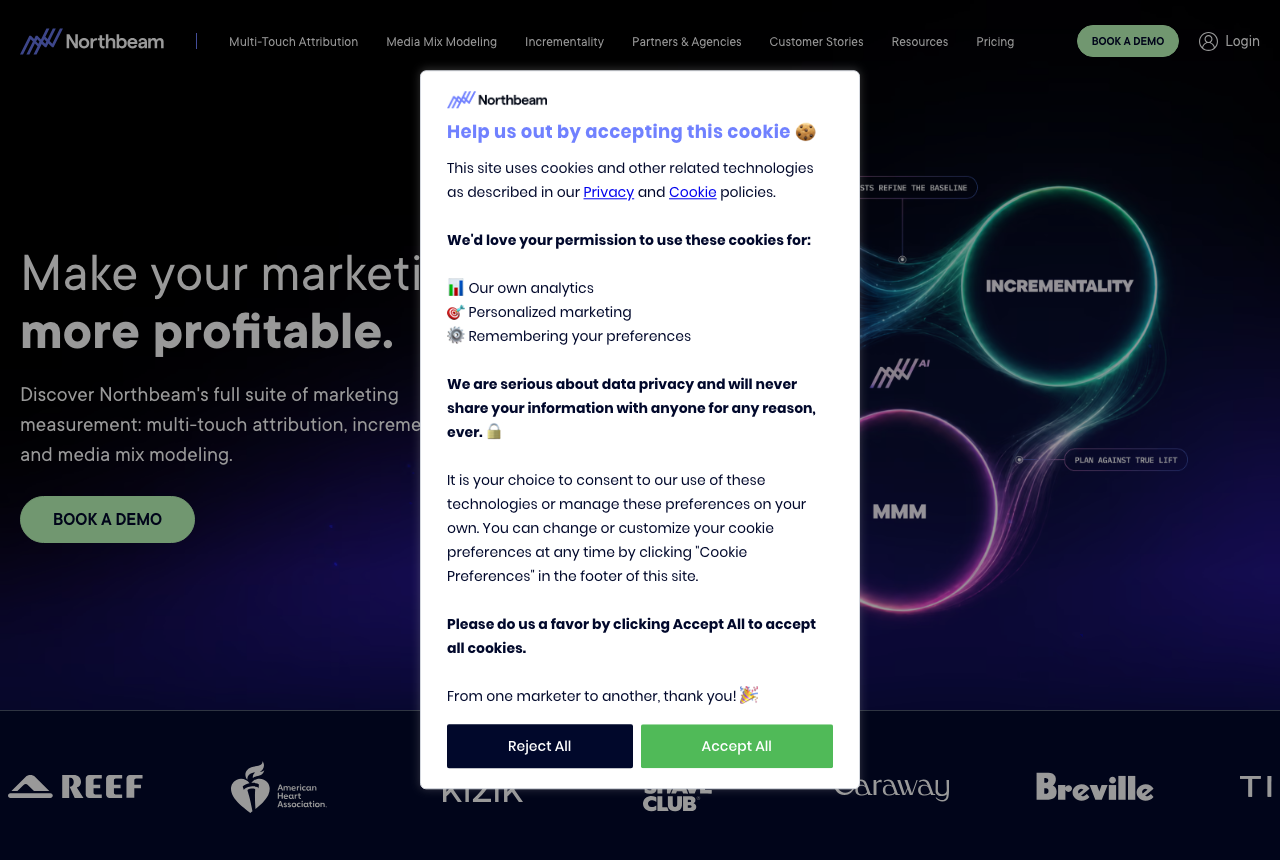
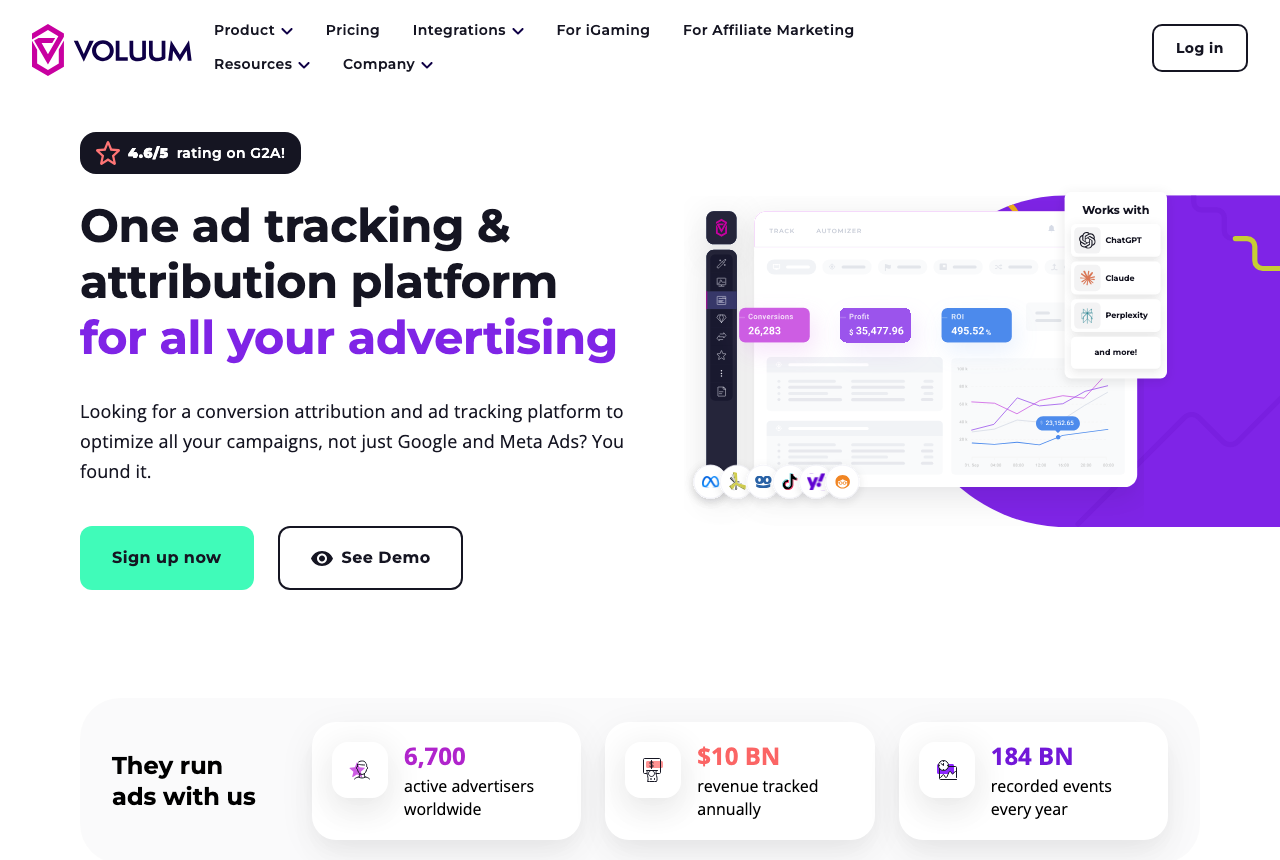
If you are down to Northbeam and Voluum, the honest starting point is that these two rarely measure the same thing. Both help you see which of your ads actually made money, but they were built for two different operations at two very different prices. Northbeam is a modeled attribution and media-mix platform for a high-spend DTC brand. Voluum is a cloud click tracker for an affiliate or native media buyer. The reader stuck between them is really deciding what kind of operation they run.
Northbeam blends first-party click data with modeled and deterministic view-through data, then layers multi-touch attribution, media-mix modeling and incrementality testing on top, so a brand spending across Meta, Google and TikTok can decide where the next dollar goes. Voluum stamps a click, catches the conversion, fires postbacks to your networks, and tells you which source, campaign and offer converted, at redirect speeds built for affiliate and native volume. One models the whole media mix for a brand. The other tracks the clicks for a buyer. They sit at opposite ends of the measurement market, and the price tags say so: Northbeam starts at $1,500 a month, Voluum at $119 a month billed annually.
The one question that decides it: what you run
Answer this before you compare a single feature: are you a brand allocating heavy spend across several channels, or a buyer tracking campaigns and offers at volume? If your problem is deciding how to split a large budget across Meta, Google, TikTok and more, and proving whether a channel is genuinely incremental, that is Northbeam's problem to solve. If your problem is knowing which click, source and landing page produced a conversion so you can cut the losers and scale the winners, that is what Voluum is for.
The scale gap decides it. Northbeam's entry price is set for heavy spenders and, by the most common complaint about it, it needs a dedicated analyst to run the models and act on them, or it becomes expensive shelfware. Voluum is cloud-hosted and self-serve, metered by events, so a buyer wires their own postbacks in an afternoon and never touches a server. Without heavy multi-channel spend and someone to own the data, most of Northbeam goes unused. With them, Voluum's click tracking never reaches the budget-split question you are actually asking.
Northbeam: modeled attribution for a high-spend brand
Northbeam is the tool you graduate to when a percentage point of attribution accuracy is worth thousands of dollars in reallocated spend. It blends first-party clicks with modeled and deterministic view-through data, and layers multi-touch attribution, mix modeling and incrementality on top. For a brand spending across Meta, Google, TikTok and more, that answers where the whole budget should go, a question a click tracker or a Shopify-first dashboard leaves open.
That power has a floor and a cost of ownership. Pricing starts at $1,500 a month and rises to $3,500 for the Professional tier, so it only makes sense above a real spend threshold. Adoption is the larger risk. The most common complaint is onboarding: one G2 reviewer described paying for Northbeam and being unable to get it usable. Northbeam earns its keep for a brand that has both the spend and an analyst or data owner to run the models and act on them.
Voluum: the proven cloud tracker
Voluum is the tracker most affiliates learned on, and that history is its real advantage. For Meta and native campaigns it is the default answer in nearly every thread, which means every traffic source, offer type and integration you might need has already been documented by someone before you. When a setup breaks at two in the morning, that depth of public knowledge is worth more than any feature checkbox. It is cloud-hosted, so there is nothing to install or patch, and its redirect and reporting infrastructure is fast and reliable at volume, with anti-fraud and traffic-distribution rules built in rather than bolted on.
The cost is money, and it is not small. Voluum is the most expensive mainstream tracker. Its tiers climb from 1 million to 5 million events with overages charged above that, so the bill grows with your traffic and is hard to predict as you scale. Like every tracker, it answers a narrower question than Northbeam. It tells you which click, source and offer converted, and it does no mix modeling or incrementality testing across channels. If your funnels are simple, a cheaper tracker would match the polish you pay Voluum for.
Two answers to two questions
Underneath the price gap sit two questions. Northbeam answers where your next budget dollar should go across every channel, with modeling that only pays off at heavy spend and only if someone runs it. Voluum answers which click, source and offer made money, for a buyer who wants a proven, hands-off tracker and can absorb event-based pricing. Put a solo affiliate into Northbeam and they pay a heavy-spender subscription for models they cannot staff. Put a large DTC brand's budget-split question into Voluum and it has no way to answer.
So the tie-break is your operation. A brand with real multi-channel spend and an analyst buys Northbeam. A buyer running paid campaigns at volume buys Voluum.
Where the pricing diverges
The two do not price on the same planet, and that itself tells you who each is for. Northbeam's tiers are priced for a brand where reallocating spend more accurately is worth many times the subscription. Voluum meters events by tier with overages on top, priced for a buyer scaling campaigns. There is no crossover to calculate here the way there is between two cloud trackers. If Northbeam's entry price sounds absurd for your situation, it is built for someone else, and if you need mix modeling and incrementality, Voluum cannot provide it at any tier.
Size both against your own numbers. Ask Northbeam's sales team what your spend level costs, and run Voluum against your real monthly events, since impression-heavy native traffic climbs its metered plan faster than the entry tier suggests.
A third path if you host the funnel yourself
Northbeam models spend across channels for a brand, and Voluum counts clicks to someone else's offer. A seller with their own product and a modest budget needs neither the model nor the redirect layer. ElasticFunnels is a funnel platform for teams running paid traffic that builds the pages, hosts the checkout, and keeps ad-spend and conversion reporting on the same data layer as the pages, the CRM and the sale. A sale in its checkout is a first-party event it records directly, and it fires server-side postbacks to your networks on purchase, refund, chargeback and renewal, covering the affiliate-tracking job Voluum does and part of the reporting Northbeam does, in one system. It also split-tests page variants under one campaign URL, so a test never sends the ad back through platform review or resets its learning. It starts with a 14-day free trial that takes no card, on plans from $97 a month, plus 0.5% of revenue processed through its hosted checkout.
It is newer than either tool here, with very little independent review coverage, so until you run real volume through it you are largely taking the vendor's word for how its reporting and postbacks hold up. Northbeam and Voluum, by contrast, have years of public setups behind them. Its reporting also covers only the funnels it hosts, so cross-channel modeling still needs Northbeam, and traffic sent to offers on other people's domains still needs Voluum. It suits the seller whose spend runs through one funnel they own.
Which one for you
You spend heavily across channels and have a data owner: Northbeam. Multi-touch attribution, mix modeling and incrementality are worth the entry price once a percentage point of accuracy moves real budget, provided you have the analyst to run the models and act on them.
You run affiliate or native campaigns and want a proven, hands-off tracker: Voluum. The most-documented ecosystem in the category, fast redirects at volume, and standard anti-fraud are the right call, as long as you can absorb event-based pricing that grows with your traffic.
You host your own funnel and checkout end to end: look at ElasticFunnels alongside them, with the newness caveat above in mind, and keep Northbeam for cross-channel budget questions or Voluum for traffic sent to offers you do not host.
Voluum is our default pick because more readers who reach this comparison are affiliates or media buyers than funded DTC brands with an analyst. A buyer weighing a cloud tracker against a heavy-spender modeling platform almost always belongs at the tracker end of that line today. For a high-spend brand with a data owner, Northbeam is plainly the more capable tool, and we rank it second in our ecommerce attribution ranking for exactly that buyer. If you are actually choosing between two trackers rather than a tracker and a platform, our RedTrack vs Voluum page takes the next step, and if you are weighing two measurement platforms, our Triple Whale vs Northbeam comparison does.
Northbeam
What works
- Combines clicks with modeled and deterministic view data for fuller paid-media attribution
- MTA, MMM and incrementality testing in one platform
- Built for the scale where measurement decisions move real budget
What to watch
- Starts at $1,500/mo, a price only a large ad budget justifies
- Onboarding is hard, and one reviewer paid but could not get the product live
- Becomes expensive shelfware without someone dedicated to run the model
Voluum
What works
- The default recommendation for Meta and native affiliate traffic, so setups and integrations are well documented
- Fast redirect and reporting infrastructure that holds up at volume
- Anti-fraud and traffic-distribution rules come standard
What to watch
- The most expensive mainstream tracker: $119/mo billed annually to start, $299 to reach 5M events
- Event overages are billed on top, so costs are hard to predict as traffic grows
- You pay for polish you may not need if your funnels are simple
Pricing
Northbeam: from $1,500/mo. Quoted after a demo and tiered by yearly media budget. Starter is published from $1,500/mo for brands spending under $1.5m a year on ads. Professional starts at $3,500/mo for spend up to $500k a month. Growth and Enterprise are custom-quoted. Incrementality and MMM+ are optional add-ons. There is no free trial or free tier.
Voluum: from $119/mo billed annually. Profit costs $119 a month billed annually and includes 1M events. Scale costs $299 a month billed annually for 5M events. The pricing page shows no month-to-month figure. Events over the Profit limit bill at $0.06 per 1,000.
Prices as of 23 September 2026
Our pick
Voluum
Voluum is the pick if you run affiliate or native campaigns and want the proven, low-friction tracker other buyers already use, provided you can absorb the price.
Frequently asked questions
Which is cheaper, Northbeam or Voluum?
Do Northbeam and Voluum do the same thing?
Is Voluum worth its price for a smaller operation?
Can Voluum replace a platform like Northbeam, or the other way around?
Sources
Other sources
2 discussions and reviews read for this page. Quotes are excerpts; open a link to read the original in context.

Written by
Dana Rourke
Lead reviewer
Dana Rourke is the lead reviewer at Campaign Buyer. She owns the tracker and attribution coverage: reading what long-term users report about each tool, checking its documentation and pricing, and verifying prices with the vendor before writing the verdict. Keeping the rankings honest mostly means writing down what the top pick gets wrong, so she does that first.
Last checked 2026-09-24