Head-to-headmedia buyer software
Polar Analytics vs Hyros
By Dana Rourke, Lead reviewer. Reviewed by Campaign Buyer Editorial. Updated 24 September 2026.
Quick answer
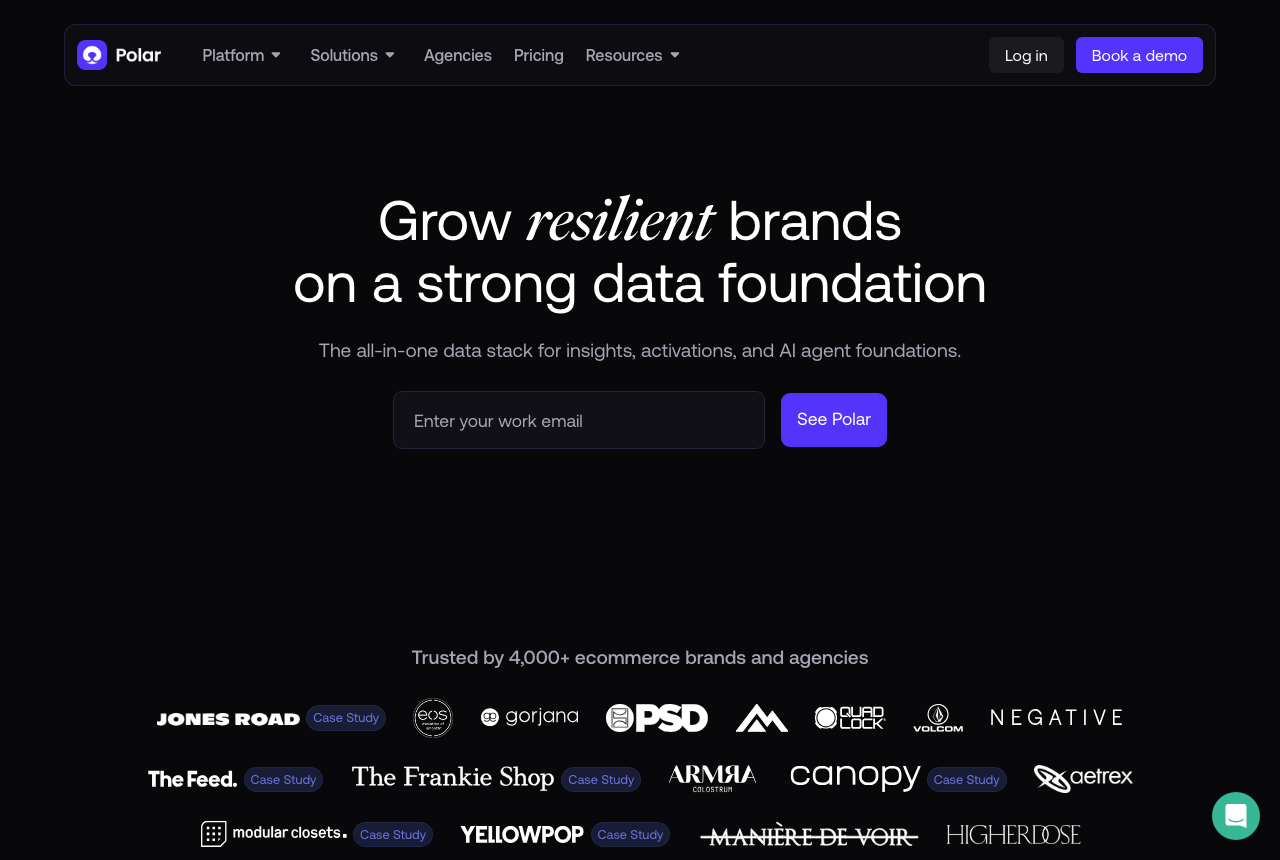
Pick Polar Analytics if you run a Shopify or DTC store and want to build your own reporting across orders, ad spend and email in one place; pick Hyros if your sale closes after a call, a webinar or a long email sequence and you need attribution that follows that journey across your CRM and payment processor.
Side by side
| Polar Analytics | Hyros | |
|---|---|---|
| What it is | Shopify BI you build | Long-funnel attribution |
| Best-fit funnel | Shopify or DTC store | High-ticket, call, webinar |
| How it tracks | First-party pixel, directional | Server-side across CRM |
| What it measures | Blended store profit | Cross-touchpoint journeys |
| Reporting style | Custom dashboards you build | Source and journey credit |
| Best-fit stage | $1M to $25M GMV | $50k+/mo ad spend |
| Entry price | $750/mo, on GMV | Custom quote |
If you are down to Polar Analytics and Hyros, the first thing to say is that these two rarely measure the same funnel. Both promise attribution you can trust more than platform-reported ROAS, but they are built for two different businesses. Polar is a Shopify-native reporting layer for a DTC store. Hyros is a server-side tracker for the long, high-ticket funnel that closes on a call or a webinar. Picking between them mostly comes down to the shape of the funnel you run.
Polar Analytics pulls Shopify, the ad platforms, Klaviyo and the rest into one place and lets a data-literate operator build custom reports, closer to a business-intelligence layer than a fixed screen. Hyros stitches a buyer's journey server-side across your website, your CRM, your email tool and your payment processor, so a sale that happens three touchpoints after the click still traces back to the ad that started it. One centralizes a store's data so you can slice it. The other follows a person through a funnel that does not end at a cart.
The one question that decides it: your funnel
Answer this before you compare a single feature: where does your sale actually happen? If it closes in a Shopify cart, in one session or a short window, your problem is reading blended profit across channels, and that is Polar's problem to solve. If it closes after a lead opt-in, an email sequence, a sales call or a webinar, standard pixels lose the thread long before the money changes hands, and stitching that journey is exactly what Hyros is for.
The gap between those two funnels is wide. Polar's attribution is first-party and directional, tuned for a store where a buyer clicks an ad and checks out. Hyros is built for the opposite shape: a high-ticket coaching program or an info offer where weeks pass and a human closes the deal on a call. Put a long call-based funnel into a Shopify dashboard and it cannot see the sale. Put a simple low-AOV store into Hyros and most of its journey-stitching machinery goes unused. If you know which of those two sentences describes your business, you already know which tool this is.
Polar Analytics: BI for a Shopify store
Polar is the pick for a Shopify brand that has outgrown a fixed dashboard and wants to build its own reporting. It centralizes Shopify, Meta, Google, Klaviyo and SMS into one place, then lets an operator assemble custom dashboards, with unlimited users and full history on the Core plan. Its attribution runs off a first-party pixel fed server-side, and Polar says plainly that the numbers are directional, with a warm-up period of about two weeks and no exact retroactive history. For a Shopify brand doing real GMV that wants reporting flexibility and a team that will use it, that is the draw, and the Shopify App Store rating backs it up at 4.9 across 117 ratings, with setup and data centralization the parts buyers praise most.
The honest cost is money and depth. Core opens at $750 a month and is priced on your GMV, which is why buyers on Reddit call revenue-linked pricing a tax and why a smaller store overpays. The recurring critique is that Polar is strong for visual reporting but tightens up once you need deep or custom attribution, which is precisely the long-journey problem Hyros exists for. Support is praised overall, but a dedicated success manager only arrives on a $10,000 annual contract, and reviewers below that report slow responses on connector problems.
Hyros: attribution for the long funnel
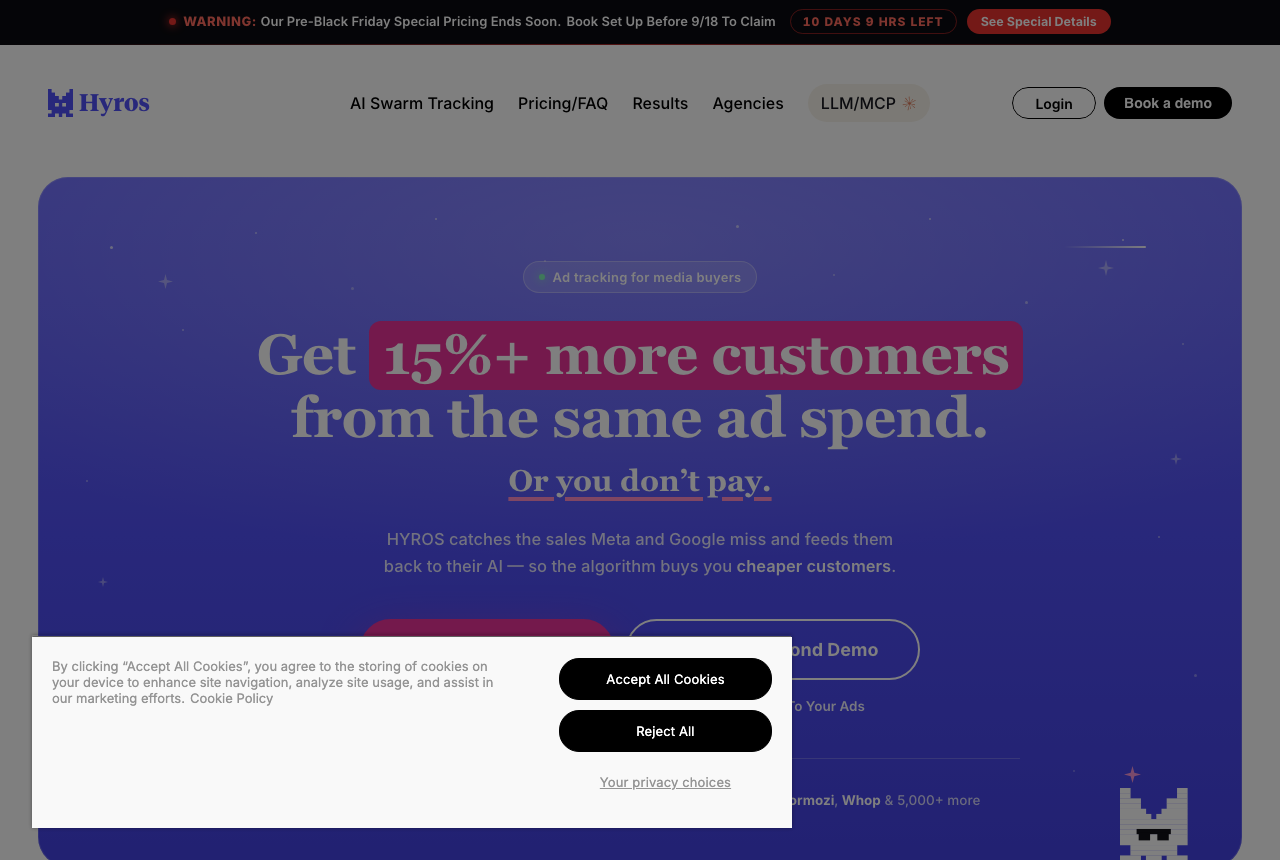
Hyros targets the funnel that runs past the checkout. If your sale happens after an opt-in, an email sequence, a sales call or a webinar, standard pixels lose the thread. Hyros tracks server-side and stitches the journey across payment processors and CRMs, which is why info-product sellers, coaches and high-ticket advertisers credit it with finding revenue Meta and Google never attributed. For a media buyer pouring spend into a funnel whose payoff is weeks and several touchpoints away, that is the whole reason to run it.
The caution is cost against scale. Pricing on the main site is quote-driven, so you talk to sales before you see a number, and buyers put the threshold around $50k a month in spend with genuinely complex funnels before it earns its keep. Below that, the machinery is wasted and a cheaper tool does the job. Its figures are also a model of the journey, so they will diverge from what the ad platforms report and will not recover every conversion lost to iOS privacy changes. Use it to make better allocation calls on a long funnel.
Where the pricing diverges
The two price in different ways, and that itself tells you who each is for. Polar publishes a number scaled to your GMV, so the bill climbs as the store grows. Hyros publishes none: you negotiate a quote with its sales team, usually from a few hundred a month up depending on your spend and funnel complexity, so there is no pricing page to compare against.
Price both against your own funnel. Polar's entry fee is a floor that rises with revenue, and a smaller store pays more than the reporting is worth. Hyros's quote scales with the value of the attribution to a high-ticket funnel, where recovering a handful of misattributed sales pays for the tool many times over. Get Hyros's number in writing before you commit, and price Polar on the GMV bracket you will sit in next year.
A third path if you host the funnel yourself
Both tools measure a funnel someone else hosts. Polar reads a Shopify store's data, and Hyros reassembles a journey from tools spread across your stack. ElasticFunnels keeps that journey in one system from the start. It is a funnel platform for teams running paid traffic that builds the pages, hosts the checkout, and keeps its ad-spend and conversion reporting on the same data layer as the pages, the CRM and the sale. A sale that closes in its checkout is a first-party event it records directly, and for a call-closed offer the CRM, automations and call center sit on that same customer timeline, which is the record Hyros is hired to rebuild after the fact. It fires server-side postbacks to your networks on purchase, refund, chargeback and renewal, and it starts with a 14-day free trial that takes no card, on plans from $97 a month, plus 0.5% of revenue processed through its hosted checkout.
The drawback is track record. ElasticFunnels is newer than either tool here, and there is very little independent review coverage to check its attribution against, while Polar and Hyros both have years of public setups and threads behind them. That is what you would expect of a platform this young, and the no-card trial lets you run your own funnel through it before you decide. Its reporting also covers only the funnels it hosts, so a Shopify store you run separately, or offers on other people's domains, still need Polar or Hyros.
Which one for you
You run a Shopify or DTC store and want to build your own reporting: Polar Analytics. Centralized data across Shopify, the ad platforms and email, custom dashboards and unlimited users pay off once a team builds on them, provided your revenue justifies the GMV-scaled bill and you accept that the attribution is directional.
Your sale closes on a call, a webinar or a long email sequence: Hyros. Server-side tracking across your CRM and payment processor is the only one of the two that can follow that journey, and it earns its quote once your spend and funnel complexity are real, roughly $50k a month and up.
You host your own funnel and checkout end to end: look at ElasticFunnels alongside them, with its thin outside track record in mind. Keep Polar or Hyros for any sale that closes somewhere you do not host.
Hyros is our default pick because more readers who reach this comparison are running the long, paid-traffic funnel it is built for. A buyer shortlisting Hyros at all usually has a call or a webinar in the funnel, and that is the journey a Shopify BI layer cannot see. On its own turf, a DTC store that wants to build its own reporting, Polar is plainly the better fit, and we rank it above Hyros in our ecommerce attribution ranking for exactly that buyer. If you also weigh a prebuilt profit dashboard or a modeled-attribution engine, our Triple Whale vs Polar Analytics and Northbeam vs Polar Analytics pages take the next step.
Polar Analytics
What works
- Pulls Shopify, ad platform and email or SMS data into custom dashboards you build yourself, not a fixed template, with unlimited users and historical data on the Core plan
- First-party pixel and server-side tracking, so the numbers survive the browser better than a pixel-only setup
- Rated 4.9 out of 5 across 117 Shopify App Store ratings, with setup and data centralization the most-praised parts
What to watch
- Core opens at $750 a month and is priced on your GMV, so the bill climbs with revenue and a small store overpays
- Buyers report it gets restrictive when you need deep or custom attribution, where Triple Whale goes wider on ecommerce metrics and Northbeam goes deeper on modeling
- A dedicated success manager only arrives at a $10,000 annual contract, and some reviewers below that flag slow support and connector delays
Hyros
What works
- Server-side tracking that follows long journeys through calls, webinars and CRMs
- Finds sales that Meta and Google miss on multi-step funnels
- Pulls sales data from payment processors and CRMs alongside site analytics
What to watch
- Overkill below roughly $50k/mo in ad spend
- Pricing is opaque and quote-driven on the main site
- Its revenue figures are modelled, so expect them to diverge from what the ad platforms report
Pricing
Polar Analytics: from $750/mo, priced on GMV. Pricing is tiered by annual gross merchandise value and quoted after a demo, and the pricing page publishes no dollar figure. The Core Plan bundles Business Intelligence, AI Agents and Data Activations, which the vendor says saves 20% on buying the products one by one. The Custom Plan lets a buyer pick products. Every plan includes a dedicated Snowflake database, an ecommerce semantic layer, a first-party pixel, unlimited users, unlimited historical data and a dedicated success manager. An instant demo runs on sample data without signup.
Hyros: from a custom quote. Hyros publishes no plan prices. It sells one plan with everything included, and the price follows the revenue Hyros tracks for you. The figure is quoted on a setup call and is aimed at higher-spend accounts.
Prices as of 29 September 2026
Our pick
Hyros
Hyros is the pick if you sell high-ticket or info products whose sales close over calls, webinars and CRM follow-ups. A low-AOV store with a short buying cycle gets little from it.
Frequently asked questions
Which is cheaper, Polar Analytics or Hyros?
Do Polar Analytics and Hyros do the same thing?
Which is better for a straightforward Shopify store?
Does Hyros publish its pricing?
Sources
Other sources
2 discussions and reviews read for this page. Quotes are excerpts; open a link to read the original in context.
- [h1] Hyros or TripleWhale?
- [h2] Hyros vs Triple Whale

Written by
Dana Rourke
Lead reviewer
Dana Rourke is the lead reviewer at Campaign Buyer. She owns the tracker and attribution coverage: reading what long-term users report about each tool, checking its documentation and pricing, and verifying prices with the vendor before writing the verdict. Keeping the rankings honest mostly means writing down what the top pick gets wrong, so she does that first.
Last checked 2026-09-24