Journey data vs planningmedia buyer software
Multi-touch attribution vs Media mix modeling
By Dana Rourke, Lead reviewer. Reviewed by Campaign Buyer Editorial. Updated 12 October 2026.
Quick answer
Pick multi-touch attribution if you need user- or journey-level credit across digital campaigns for weekly optimization and creative decisions; pick media mix modeling if you allocate six-figure-plus budgets across channels (including offline and upper funnel) and need forecasts, saturation curves and scenario planning.
Side by side
| Multi-touch attribution | Media mix modeling | |
|---|---|---|
| What it is | Journey-level digital credit model | Aggregate statistical budget model |
| Core question | Which touches helped this conversion? | How did channels move total revenue? |
| Data grain | User and journey interactions | Aggregated spend and outcomes |
| Time horizon | Daily and weekly optimization | Planning, forecasts and scenarios |
| Primary output | Credit by channel, campaign or touch | Response curves and budget allocation |
| Offline and marketplaces | Limited where journeys are not observed | Can include offline and marketplace effects |
| Privacy posture | Relies more on observable identity and events | Works from aggregate data |
| Who runs it | Growth or performance marketing team | Analytics, finance and marketing leadership |
Marketing mix modeling vs attribution
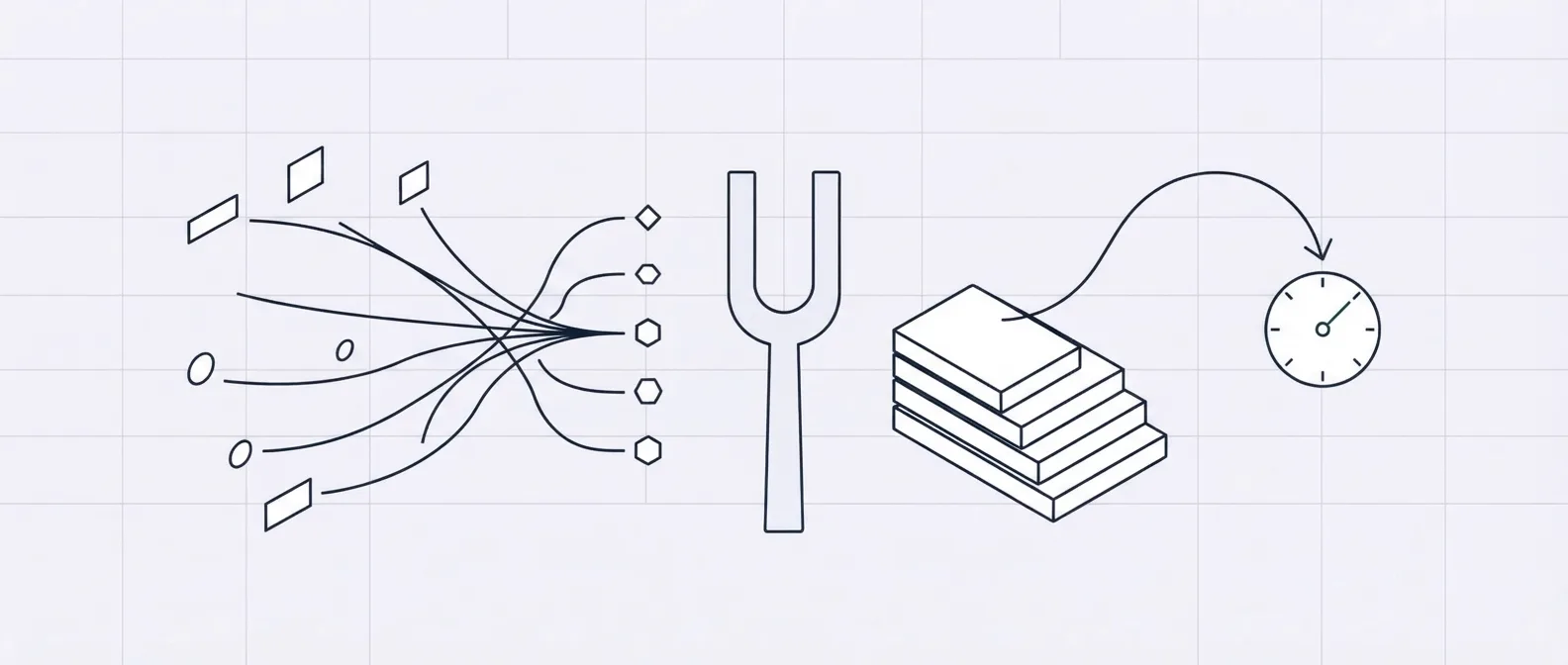
Multi-touch attribution and media mix modeling can both put channel credit on a dashboard. That is where the similarity ends. The useful choice depends on whether you need to change digital campaigns this week or allocate a large cross-channel budget for the next planning cycle.
Multi-touch attribution works from observable user-level interactions. It connects visits and conversions across a journey, then applies a credit model. Media mix modeling works from aggregate spend and outcome data. It estimates how channels moved revenue over time, including channels and effects that do not leave a clean user path.
This is the upstream fork behind many product comparisons on Campaign Buyer. If you already know you need a platform, our Triple Whale vs Northbeam, Northbeam vs Fospha and Triple Whale vs Fospha comparisons narrow the software choice. If you are still deciding what measurement layer comes first, stay here.
What multi-touch attribution gives a campaign team
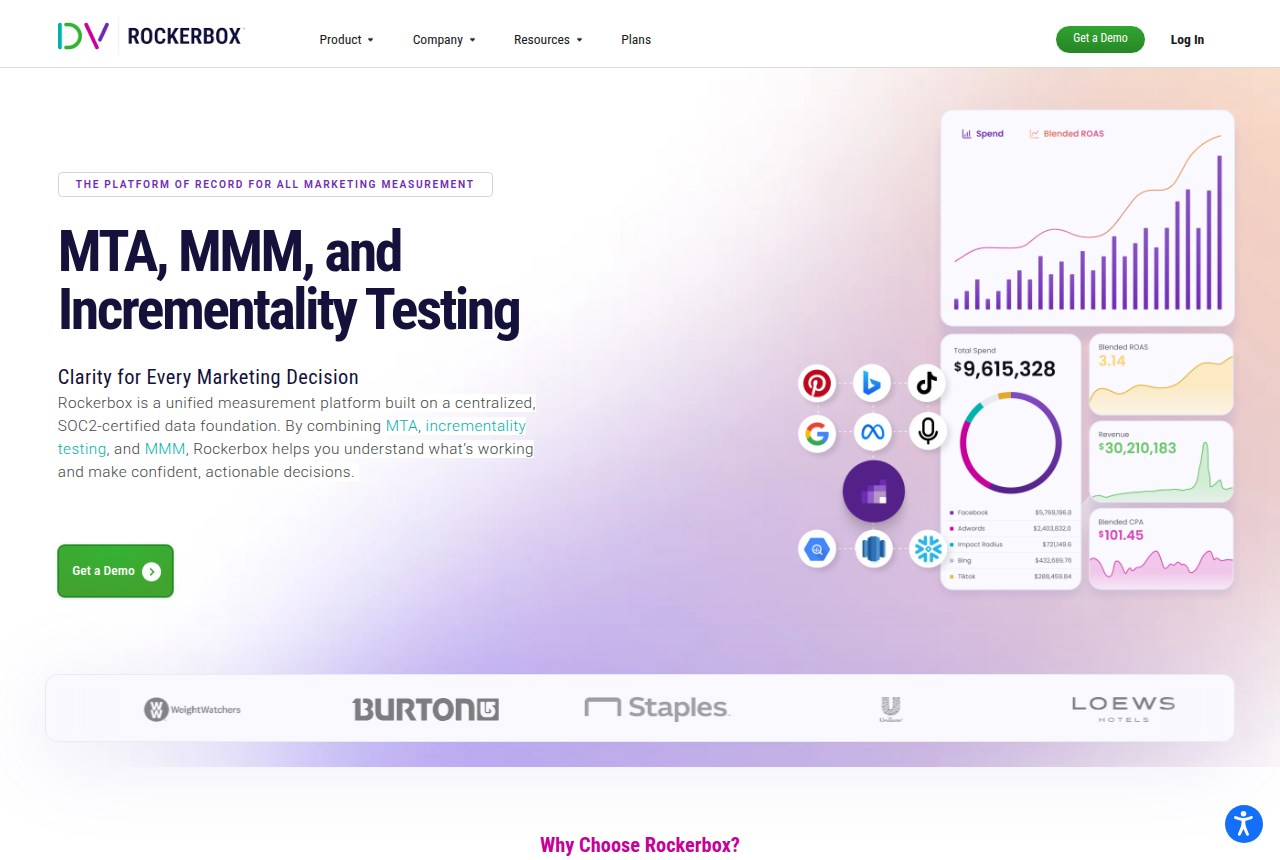
MTA is the more tactical method. Rockerbox describes it as campaign-level insight for day-to-day decisions. Northbeam's product page emphasizes multiple credit models, flexible accounting modes and long lookback windows across channels. The common job is to divide digital conversion credit among known touches so a buyer can change campaigns, audiences and creative.
That user-level grain is the appeal. You can ask which journeys included paid social, search or email before a sale, then compare what first-touch, last-touch or another model says. A weekly media meeting can act on that detail. It is also easier to connect the result to the campaign and creative structures that buyers already manage.
The limit is observability. MTA is strongest where identifiers and digital events let the platform reconstruct a journey. Offline media, upper-funnel exposure, marketplace sales and privacy loss create gaps. A model can still assign precise-looking percentages, but the percentages depend on the journeys the system can see and the rule used to divide credit.
MTA sits on top of reliable conversion capture and cannot replace it. Our click tracker vs attribution platform guide covers that earlier layer. A click tracker or server-side event pipe records and returns conversions. MTA answers how credit should be divided after the relevant touches reach the dataset.
What media mix modeling gives a planning team
MMM takes a top-down view. It relates changes in aggregate media spend to changes in revenue or another business outcome. Because it does not require a complete identity trail for every buyer, it can include offline media, upper-funnel channels and marketplace effects that journey-level attribution misses.
The outputs fit a different meeting. A planning team wants forecasts, saturation curves and scenarios. It asks what might happen if budget moves from one channel to another, rather than which ad touched one customer's order. Fospha positions its product as daily MMM and says its Halo model measures how paid media affects Amazon, TikTok Shop and retail marketplace sales beyond the direct-to-consumer site.
Modern MMM can run far more often than a quarterly consultant deck. Northbeam says MMM+ can retrain daily and adjust forecasts and allocations daily. Fospha also presents always-on daily modeling. Faster refresh does not turn MMM into user-level attribution. The method still works from aggregate relationships and is judged by whether its forecasts and allocation guidance hold up.
Implementation is the cost beyond the subscription. Rockerbox says either MTA or MMM can take six to eight weeks depending on data readiness and complexity. A practitioner discussion in our research warns that more MMM projects fail than succeed, while advanced teams often combine MTA with incrementality and sometimes MMM. That is one practitioner's experience, but it is a useful warning about weak inputs and unclear ownership.
MTA vs MMM: the data and privacy trade-off
MTA needs more journey detail. That makes it useful for decisions about individual campaigns and ads, but more exposed to missing identifiers, consent limits and journeys that cross devices or environments. MMM can work with aggregated spend and revenue. That gives it a stronger privacy posture for broad planning, but less detail about one person, one ad or one path.
Neither method removes judgment. MTA needs a defensible credit rule and clear event definitions. MMM needs enough variation and clean history for the model to separate channel effects. The minimum history varies by vendor, market and model. Treat any single universal threshold as a sales shortcut. Ask the vendor to show what data it needs from your actual channel mix.
Use incrementality as a tie-breaker when the models disagree. A holdout or lift test can ask whether a channel caused additional outcomes rather than merely appearing near them. Both models stay useful. The test gives the team another piece of evidence when MTA credit and MMM allocation point in different directions.
The pricing reality behind the two methods
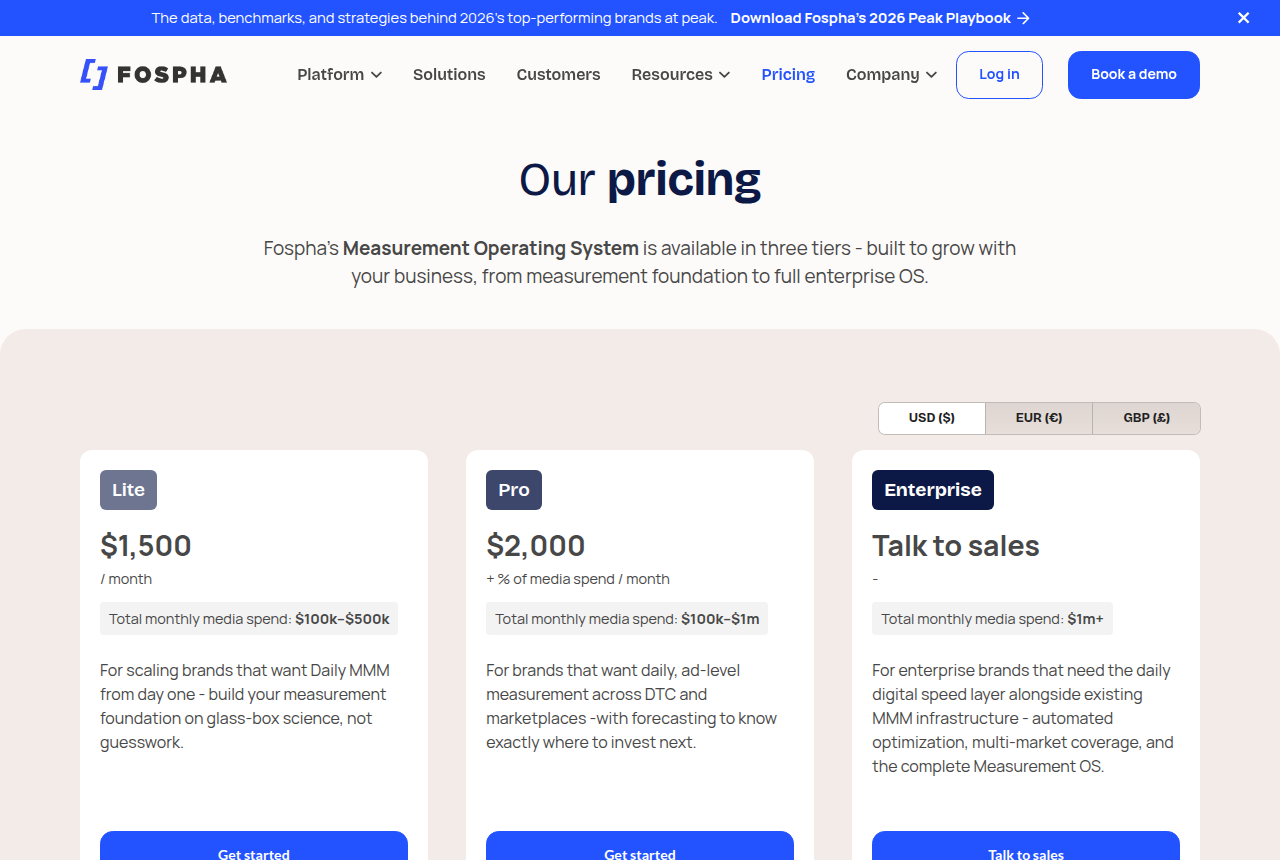
Northbeam sells its MTA product through a demo and does not publish a plan price on the product page. Fospha publishes a clearer floor: Lite is $1,500 per month for brands spending $100,000 to $500,000 per month on media. Fospha's higher tiers use different spend bands and commercial terms, so the percentage or total cost needs a current quote.
Both methods usually arrive inside a platform subscription. The software price covers only part of the commitment. You still need event mapping and identity work for MTA, or clean spend and revenue histories plus model ownership for MMM. Rockerbox's six-to-eight-week implementation range is a better planning assumption than expecting a dashboard to settle the argument on day one.
The practical order for a smaller paid-traffic team is MTA first. Buy MMM when the allocation question is large enough that a modest budget shift can repay the platform and the people maintaining it. Fospha's published Lite band gives a useful signal: the offer starts with brands already spending at least $100,000 a month on media.
When you need both
Larger teams often need both methods because the jobs do not collapse into one score. MTA helps the channel manager decide what to change now. MMM helps leadership and finance set budgets across channels, including places where user paths are incomplete. Incrementality tests check the largest disputed bets.
A sensible operating rhythm is to use MTA for weekly campaign and creative decisions, MMM for broader allocation and scenarios, and controlled tests when the two models disagree. Do not add the outputs together. Each is an estimate built for a different question.
If your product shortlist is already taking shape, read the Northbeam review, Fospha review and Rockerbox review. Our ecommerce attribution software guide compares the broader field.
Where ElasticFunnels fits beneath MTA and MMM
ElasticFunnels is a funnel platform for teams running paid traffic. It builds and clones pages, rotates split-test variants under one campaign URL, hosts checkout, and keeps attribution, CRM records, automations and call-center work on one data layer. A click, order, rebill and refund inside the funnel can remain on one customer timeline.
That makes it the build-and-capture layer below this choice. It does not run multi-touch credit models or an enterprise MMM. Its same-URL tests keep one campaign link while variants rotate server-side. The checkout supports order bumps, one-click upsells and subscriptions. Multi-MID routing applies only to sellers using several NMI merchant accounts. Teams that do not need that routing still get the page builder, testing, checkout, attribution and CRM.
The proof gap is real. ElasticFunnels is newer than the platforms it competes with, and there is very little independent third-party review coverage available to check its claims. Until you run meaningful volume through it, you are relying largely on the vendor's account of how its reporting holds up. It has been built since 2023, which explains the thin outside record but does not remove the uncertainty. Its 14-day free trial requires no credit card, so you can validate the funnel, same-URL test and captured revenue against your own campaigns before committing.
Which method should you choose?
Choose MTA when your next decision is about a digital campaign, audience, creative or journey and you need to revisit that decision every week. It is the default pick for the core Campaign Buyer reader because it operates at the same level as the work.
Choose MMM when you allocate at least a six-figure monthly media budget across several channels, including offline, upper-funnel or marketplaces, and finance needs forecasts and scenarios. MMM plainly wins that job because aggregate planning is what it is built to do.
Choose both when channel managers need journey detail and leadership needs cross-channel allocation. Give each method an owner, document which question it answers, and use incrementality to investigate material disagreements. Browse all comparisons or read how we evaluate tools before you select a platform.
Tools that do each job
The products we review for each method, linked to their full reviews.
Multi-touch attribution
Suites that divide digital conversion credit across known touches, with a choice of credit models.
-
Northbeam review
Best for high-spend DTC brands with a data owner to run the models.
-
Rockerbox review
Best for mid-market and enterprise brands measuring offline and digital together.

Media mix modeling
Daily MMM is this product's core. Both suites in the first group also sell an MMM module.
-
Fospha review
Best for scaling and enterprise retail brands spending $100k+/mo on media who want platform-independent, full-funnel measurement.
The funnel beneath both methods
A funnel platform that hosts pages and checkout captures the click, order, rebill and refund on one record, which is the raw material either model reads.
-
ElasticFunnels review
Best for running the pages, split testing, checkout and reporting as one funnel platform instead of four separate tools.

Frequently asked questions
Multi-touch attribution or media mix modeling: which should I use?
Can you use multi-touch attribution and media mix modeling together?
When is media mix modeling overkill?
What is the simplest marketing mix modeling vs attribution rule?
Can you use ElasticFunnels instead of MTA or MMM?
Sources
Vendor pages
- Rockerbox measurement platform
- Rockerbox media mix modeling
- Northbeam multi-touch attribution
- Northbeam MMM+
- Fospha measurement platform
- Fospha pricing
Sources
Other sources
1 discussions and reviews read for this page. Quotes are excerpts; open a link to read the original in context.

Written by
Dana Rourke
Lead reviewer
Dana Rourke is the lead reviewer at Campaign Buyer. She owns the tracker and attribution coverage: reading what long-term users report about each tool, checking its documentation and pricing, and verifying prices with the vendor before writing the verdict. Keeping the rankings honest mostly means writing down what the top pick gets wrong, so she does that first.
Last checked 2026-10-12